
What is Electricity: A beginner’s guide
Electricity is one of those everyday forces we use without thinking, yet it’s full of fascinating science. From the spark on a doorknob to the power behind home appliances, understanding electricity helps you work with devices safely and confidently.
Like most things in life, electricity is more complex than you might think. A lot of conditions have to be just right and come together to make that little spark when you touch a car door or provide power to a small single board computer. To understand how electricity works, we have to break it down it into parts.
How Electricity Shows Up in Daily Life
When you plug in a kettle, switch on a TV, or power an alarm system, you are using electricity. It is the energy that moves through wires and components, making things light up, spin, buzz, and respond.
– Electricity powers appliances, lighting, and electronics
– It can be natural, like lightning
– It can be harnessed and controlled for useful work
> Tip: Electricity itself is invisible, but its effects are easy to see—light, heat, motion, and sound.
The Building Blocks: Electrons and Protons
At the heart of electricity are tiny particles called electrons and protons.
- Electrons carry a negative charge
- Protons carry a positive charge
- Opposite charges attract, like tiny magnetic glue
This attraction helps hold atoms together. Protons stay in the nucleus, while electrons are more likely to move around.
The Glue That Holds Matter Together
This attraction between electrons and protons acts like microscopic glue, holding atoms—and therefore all matter—together. Protons tend to stay put in the nucleus of an atom, but electrons are a bit more adventurous. They don’t like to stay in one place and can move from one atom or object to another.
Why Electrons Move
Electrons don’t always stay put. They can jump from one atom to another, and when they move in a path, that movement is what we call electric current.
Examples:
- A spark from a doorknob after walking on carpet
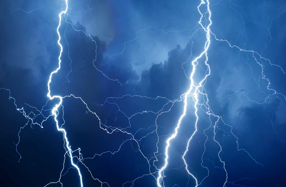
- Lightning between a cloud and the ground
These are examples of electrons moving in an uncontrolled way. When we guide that movement through wires and circuits, we get usable electricity.
Ever walked across a carpet on a dry day and felt a spark when you touched a doorknob? That’s electrons jumping ship from your finger to the doorknob. Lightning is another dramatic example—electrons traveling between a cloud and the ground. In both cases, you’re seeing electricity at work in its wild, unharnessed form.
So, electrons and protons may be tiny, but their dance of attraction and movement is what makes everything from dust to sumo wrestlers—and even the occasional lightning bolt—possible. It’s a reminder that even the smallest things play a big role in the world around us!
Electricity, Current, Voltage, and Resistance
Electricity is a flow of electric charge, most often electrons moving through a conductor such as a wire.
- Current: the flow of electrons, measured in amperes (amps)
- Voltage: the force that pushes electrons, measured in volts
- Resistance: the opposition to flow, measured in ohms
Ohm’s law explains the relationship:
- More voltage pushes more current
- More resistance reduces current
Insight: Knowing how these three work together is essential for designing and maintaining electrical systems, including alarm systems. Electricity?
Different Forms of Electricity
Electricity appears in several forms, each with its own use and behavior.
Common forms
- AC (Alternating Current): used in homes and buildings
- DC (Direct Current): used in batteries and many electronic devices
- Static electricity: a buildup of charge in one place
- Lightning: an uncontrolled atmospheric discharge
- Complex data signals: electricity used to transmit information in devices
Each form is still electricity, but the way the electrons move can be very different.
Electricity and Safety
Electricity is powerful, useful, and potentially dangerous.
It’s important to be aware of the dangers of electricity and to take necessary precautions when working with it. Always make sure to follow the rules and regulations set by the relevant authorities, and if you’re not confident in your ability to work safely with electricity, it’s best to consult with a professional. It’s also important to remember that electricity can be lethal, so never attempt to work on electrical equipment when the power is still on.
- Always turn power off before working on circuits
- Follow local rules and safety standards
- If you are unsure, ask a qualified technician
Warning: Electricity can be lethal. Never work on live electrical equipment unless you are trained and have the right tools.
Static electricity can damage sensitive equipment, and lightning can harm both people and devices. In many regions, proper protection and insurance are important.
Why Understanding Electricity Matters
Electricity is the foundation of modern technology, from simple lamps to advanced alarm systems. Understanding its basic rules helps you use it safely and make better decisions when working with electronics.
Key points
- Electricity is energy from moving electrons
- It can be controlled or uncontrolled
- Voltage, current, and resistance are the core concepts
- Safety must always come first
Conclusion
Electricity may seem mysterious, but it is really the result of tiny particles moving and interacting. By learning how electrons, voltage, current, and resistance work together, you can make sense of the electrical world around you. Whether you are exploring alarm systems or everyday devices, a clear understanding of electricity is a strong first step.