Welcome to Basic Electronics
Safety First
Before you jump in, let’s get the one thing that matters most out of the way: safety.
– This guide is focused on low-voltage alarm systems (typically 12V-24V), but your panel may be different.
– Don’t work on live circuits unless you know what you’re doing and have the right tools.
– When in doubt, reach out to a licensed electrician or the equipment manufacturer.
– Wear PPE when handling batteries, soldering, or working near exposed conductors.
– Discharge capacitors safely before touching components.
This stuff is powerful and useful, but it pays to respect it.
Why This Guide Exists
If you’ve ever looked at an alarm system and wondered what all those wires and resistors actually do, you’re in the right place.
This page is the practical launchpad for anyone who wants to understand the electronics behind alarm systems — not just memorize wiring diagrams.
Whether you’re a new installer, a tech brushing up on fundamentals, or a DIYer trying to understand a fault, this guide walks you through the must-know ideas without the academic fluff.
“Basic Electronics” refers to the study and application of electrical systems and circuits. It encompasses the fundamental principles of electricity and electronics, including the behaviour and manipulation of electrons and their interactions with different components such as resistors, capacitors, and transistors. This knowledge is applied in a wide range of fields, including telecommunications, renewable energy, and consumer electronics. Understanding the basics of electronics is crucial for the design and construction of modern devices and systems, especially security systems.
📚 What You’ll Learn Here
This is a roadmap, not a textbook. We break the subject into small, readable pieces and pair each concept with the real-world security work that makes it useful.
- Electricity basics with security system examples
- The components you’ll actually see in the field
- Why end-of-line resistors matter
- How to use a multimeter like a pro
- Practical labs that let you test what you’ve learned
- Quick troubleshooting checks for the most common alarm faults
Note: The listed equipment is not mandatory for participation, but it can be used for demonstration purposes. If you wish to follow along, these are the basic components required for basic electronics in alarm systems. You might need a Relay board, 7AH SLA battery, a bit of cable, a push button, and a couple of resistors.
The following is a list of the equipment required to experiment with basic electronics for alarm systems:
- 1 x Relay Board
- 1 x 7AH Battery/7.2AH battery SLA Battery
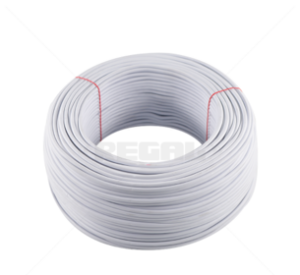
- 1 x 2-meter 4 core cable (cable rolls are sold in 100-meter sizes)
- 1 x NO/NC Panic Button
- 1 x LED
- 1 x 5K6 resistor ¼ Watt
- 1 x 1K Resistor ¼ Watt
- 1 x 2K2 Resistor ¼ Watt
- 1 x 4K7 Resistor ¼ Watt
Tools Needed
Note: It’s not required to have a alarm system to follow along.
Relays
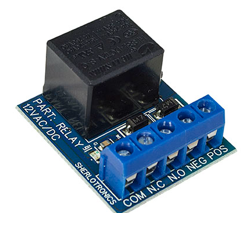
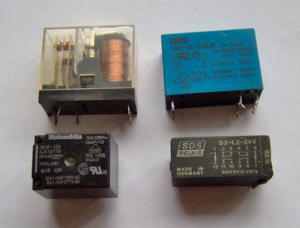
In this example, a commonly used 12Vdc relay board for alarm systems is depicted below. The screw terminals allow for easy and secure connection to the relay without the need for soldering. Relays are utilized in alarm systems to switch high power devices such as sirens, which require more current than what the alarm panel can supply. The use of relay boards also offers the benefit of neatly contained connections, promoting proper and secure installation.
These relay boards also have the added advantage that connections are not exposed and easier to do when done correctly.
7AH Batteries
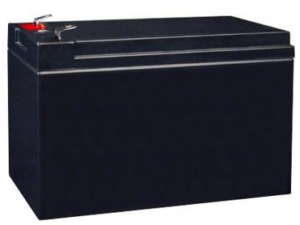
7AH Sealed lead acid batteries or Absorbed Glass Matt is a deep cycle battery. A deep cycle battery is designed to be regularly discharged using almost using all of their available capacity. SLA (sealed lead acid) batteries are commonly used as backup power sources in alarm systems due to their reliable and durable nature. The 7AH capacity ensures that the battery can provide power to the alarm system for an extended period of time during power outages. It is important to note that proper maintenance and care should be taken to ensure the longevity and performance of the battery.
Advantages
- Up to 2x longer life than standard flooded batteries
- Designed for harsh climates and demanding conditions.
- Typically Handles high electrical loads.
- Quickly recharges and extends cycle life
- Vibration resistance
- Non-spillable and maintenance-free
- Greater mounting flexibility
The 7AH SLA batteries are used as a backup power source to ensure that the alarm panel continues to operate even during power outages or load shedding. These batteries are designed for deep cycle use, which means that they can be regularly discharged. The batteries are rated for 2.5A at 13.4V when fully charged and are available in different Ah capacities ranging from 7 to 8AH, in a similar form factor, depending on the manufacturer. To read up see the link below: https://en.wikipedia.org/wiki/Deep-cycle_battery
4/6 Core Cable
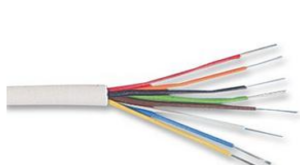
In alarm systems, cable plays an important role in connecting all the peripherals. It comes in different colours, such as white/brown or black, to identify the individual strands or cores. There are two types of cable used in alarm systems: copper and CCA (Copper Clad Aluminium). Copper cable is commonly used, while CCA is a more cost-effective alternative. However, copper is generally considered to be a higher-quality option due to its better conductivity properties. The choice of cable will depend on the specific requirements of the alarm system and the specific application it will be used for.
Panic Buttons
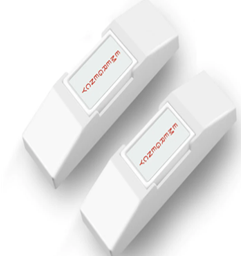
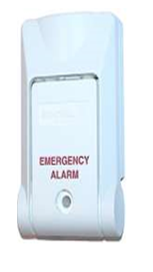
Push buttons or panic buttons are switches commonly used in alarm systems to trigger emergency alarm conditions. They are typically labeled with the words “Emergency” or “Emergency Alarm” to indicate their function and often have a glowing feature in low light conditions for easy identification. These buttons are an important component in ensuring safety and security in alarm systems.
LED
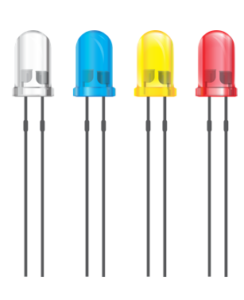
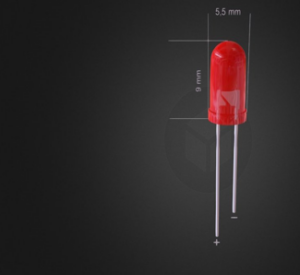
Light Emitting Diodes, or LEDs, are a commonly used visual indication in alarm systems. They come in various shapes and sizes and offer different lighting characteristics. In alarm systems, they are often utilized as indicators for alarm conditions, armed state, panic situations, or movement associated with a specific zone. LED lights are polarity-sensitive, so it is important to ensure that the polarity is not reversed to avoid any functional issues.
Resistors
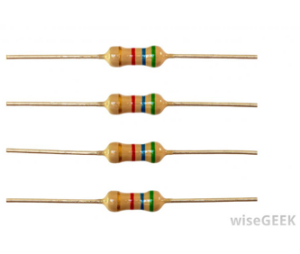
In alarm systems, resistors play a crucial role as End of Line (EOL) values or current-limiting resistors for LED usage. They are available in various sizes and capacities. For practical purposes, it is recommended to use quarter or half-watt resistors with a 5% tolerance, and with a value of 5K6. This selection of resistors is appropriate for the exercises involved.