
Resistors for Alarm Systems
End of Line Resistor values for alarm systems differ from manufacturer to manufacturer. Depending on the system (DSC, RISCO, TEXECOM, CADDX) the end of line resistor value will differ for that system. We could almost suggest that the value is unique to the system. Most systems do use values that are almost similar, but not every system.
Modern alarm systems have added the option to program your own EOL (End of Line) resistance value, so you can use any resistor value that you have on hand. Typical values that they use range from 5K6, 4K7 or 3K3. If the system allows you to program a value, that value is a global setting, meaning that all zones must be of the programmed value. Usually only a couple of zones can have a customized value.
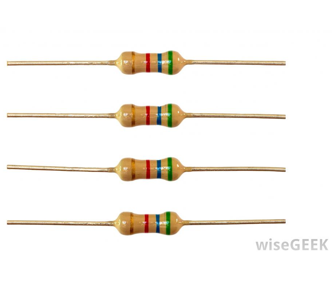
End-of-Line (EOL) resistors are used in alarm systems to protect the system against short-circuits or tampering. These resistors are connected in series at the end of each alarm zone, typically at the last device in the circuit, such as a motion sensor or door contact. The EOL resistor helps to establish a stable voltage level in the circuit and ensures that the alarm control panel can accurately detect an alarm condition.
Wired Zone Monitoring and Alarm Conditions
In traditional wired alarm systems, End-of-Line (EOL) resistors are used to monitor the integrity of the wiring and connected devices, such as door contacts or motion sensors. These resistors are placed at the end of the circuit, allowing the control panel to distinguish between different states: normal (closed), alarm (open), and tamper (shorted or cut wires), all by using one zone input. The more restores added the more conditions can be monitored by just using a single zone.
SEOL – Single End-of-Line Resistor
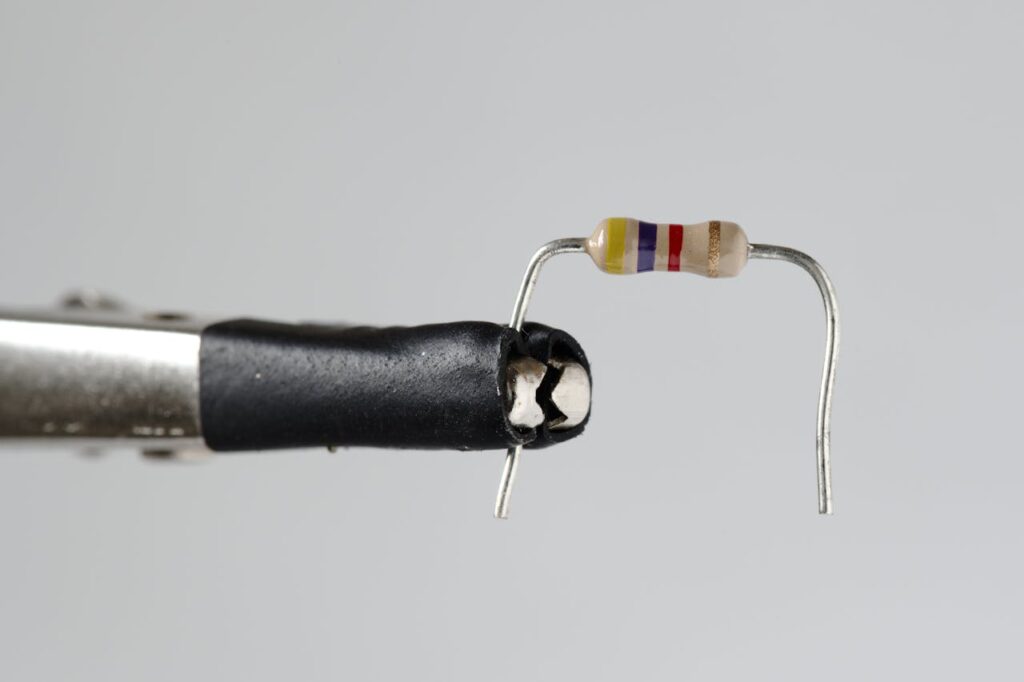
A Single EOL configuration uses one resistor at the end of the zone circuit.
The resistor allows the control panel to differentiate between:
- Normal condition: Alarm contact closed with resistance close to zero.
Alarm condition: Alarm contact open with resistance close to EOL resistance value. - Tamper condition: Alarm contact close and Tamper contact open. Open Circuit condition. This can be because the sensor is open or the wire is cut.
- This is the simplest form of EOL supervision.
DEOL – Double End-of-Line Resistor
A Double EOL configuration uses two resistors: typically, one for the alarm contact and another for tamper.
This allows the panel to recognize four distinct states:
- Normal (standby): Current flows through single resistor. Alarm contact closed and tamper contact closed.
- Alarm (triggered): Current flows through both resistors in Series. Alarm contact Open(resistor in parallel), and Tamper contact closed.
- Tamper (wires cut): Open Circuit. This is when the sensor is open or when the wire is cut
- Short Circuit: Zero or low value reading on the multimeter.
- DEOL gives better security by adding another layer of detection. you are monitoring two conditions on a single pair of wires. Alarm, and Tamper conditions.
TEOL – Triple End-of-Line Resistors
A Triple EOL configuration uses three resistors and is often employed in higher grade security enviroments
It allows the detection of:
- Normal condition: Current flows through single resistor. Alarm contact closed and tamper contact closed, and sensor fault contact closed.
- Alarm (Sensor triggered): Current flows through 3 resistors in Series. Alarm contact Open, and Tamper contact closed, ad fault contact closed
- Alarm
- Tamper (short circuit or cut wires)
- Fault condition (Device error state)
- TEOL is typically used in Grade 3 security systems or higher where tamper protection is critical at both the detector and wiring level.
Summary
- EOL(End of Line) Resistors
- Alarm panel zone is configured/calibrated to read these End of Line values.
- EOL resistors are there to help detect more than one condition on a single wire.
- Alarm condition (Movement)/Open Zone/Trouble condition (Open/Circuit)