
Battery Installation: Safe replacement, Connection and Testing
Before You Begin
When installing or replacing batteries in an alarm system, it’s important to consider the following points in order to prolong their operation and ensure reliable performance:
- Battery type: Make sure to use the correct type of battery specified by the manufacturer for your alarm system.
- Battery size: Ensure that the batteries are the correct size for your alarm system, as specified by the manufacturer.
- Battery age: Use fresh batteries and check the expiration date before installation. Old batteries may not have enough energy to power the alarm system effectively.
- Battery polarity: Make sure to install the batteries with the correct polarity, following the diagram or instructions provided by the manufacturer.
- Terminal corrosion: Clean the battery terminals and the inside of the battery compartment to prevent corrosion that could affect battery performance and battery life.
Safety Precautions
By following these steps, you can help to prolong the life of the batteries in your alarm system and ensure reliable performance. To install the battery in its compartments,
- Secure battery firmly: Make sure the battery is securely installed in the compartment to prevent it from being tampered with, or cause a short if accidentally pushed or moved.
- Install the battery away from heat generating equipment, in an upright position: Batteries should be installed in a location that is away from heat-generating equipment, such as motors or heaters, to prevent overheating and prolong the life of the batteries.
- Ensure adequate ventilation: Batteries generate gas during operation, so it’s important to ensure that there is adequate ventilation to allow the gas to escape and prevent damage to the battery. Most of the batteries used for alarm systems sealed lead acid batteries or Valve-Regulated Batteries These are lead-acid batteries that have a sealed casing that prevents the escape of oxygen gas, hydrogen gas, and water vapor formed inside the battery. The hydrogen and oxygen gases will be forced to recombine back into the water. If the wrong type of battery is used, it might pose as a safety risk.
- Never bend terminals or solder on the battery terminals: Bending or soldering the battery terminals can cause damage to the battery, affect performance, and potentially create a safety hazard. Always handle the battery with care and follow the manufacturer’s instructions for installation.
Things to avoid
- Are of different brands or types: Batteries from different manufacturers or with different specifications (e.g. alkaline vs. lithium) can have different voltage outputs, operating temperatures, and safety requirements. Connecting these batteries together can create an imbalance and cause damage to the batteries or the device they are powering.
- Age differences: Batteries can have different performance levels based on their age, even if they are the same brand and type. Older batteries may have lost some of their energy capacity or may be in poor condition, which can cause imbalances and safety risks when connected to newer or fresher batteries.
- Have different capacities or performances: Batteries with different capacities or performance levels can cause imbalances in a connected circuit, leading to overloading or underloading of individual batteries and affecting the performance and lifespan of all the batteries.
Reliable Battery Operation
To ensure safe and reliable operation, it’s important to use batteries that are all of the same type, brand, age, and capacity when connecting them together, when series or paralleling batteries. Avoid using the battery in the following areas. Batteries should be protected from extreme temperatures, direct sunlight, dust, salt, corrosive gases, and excessive vibration, as these can affect the performance and lifespan of the batteries.
Here’s a brief explanation of each point:
- Exposed to direct sunlight: Direct exposure to sunlight can cause overheating, which can damage the battery or reduce its performance and lifespan.
- Above 35 Degree Celsius: High temperatures can increase the rate of self-discharge and cause damage to the battery. Excessive heat can also cause the battery to leak or even explode.
- In areas where it’s extremely cold: Extreme cold temperatures can reduce the performance and capacity of the battery and make it more difficult for the battery to deliver its full power.
- Areas with dust, salt or corrosive gasses: Dust, salt, and corrosive gasses can cause corrosion and damage to the battery terminals, affecting performance and lifespan.
- Areas with abnormal vibration: Excessive vibration can cause damage to the battery and affect performance, so it’s important to protect the battery from extreme vibrations or shocks.
Battery Service Life
- High ambient environmental temperatures: As you mentioned, high temperatures can significantly reduce the lifespan of a battery, especially if it’s exposed to high temperatures for long periods of time. The rule of thumb you mentioned, that for every 10 degrees above 20°C the battery life halves, is a general guideline that can help to estimate the impact of temperature on battery life.
- Continuous overcharging: Overcharging a battery for extended periods of time can cause damage to the battery, reduce its capacity, and shorten its lifespan.
- Frequent discharging below the maximum discharging voltage: Frequently discharging the battery below its recommended minimum voltage can also cause damage to the battery, reduce its capacity, and shorten its lifespan.
- Long storage without recharging: If a battery is stored for a long period of time without recharging, it can become completely discharged, causing permanent damage to the battery and reducing its lifespan.
When a battery’s original capacity is no longer available after charging, it means that the battery is reaching the end of its life and it’s time to replace it. Reduced backup times and sudden shut offs are common signs that a battery is no longer performing optimally.
Regarding the disposal of batteries, it’s important to follow the proper guidelines and procedures to ensure that they are disposed of safely and in an environmentally responsible manner.
Transporting Batteries
When transporting batteries, it’s important to take certain precautions in order to avoid damage and ensure safe transportation:
- Avoid vibration or jolting: Vibrations or jolts during transportation can cause damage to the batteries and reduce their lifespan.
- Transport in an upright position: This helps to prevent spills and minimize the risk of damage to the batteries.
- Avoid packing batteries next to one another: When packing batteries, it’s important to ensure that there is no possibility of shorting between the batteries.
- Watch out for aluminum ladders in the back of a UTE: Aluminum ladders can generate sparks that can ignite any flammable material near the batteries, causing a fire hazard.
Cleaning Batteries
When cleaning and handling batteries it is important you do not use any abrasive chemicals or cause a short. Below is a list of things we never do!!!
- Never short the battery terminals
- never disassemble a battery
- never reverse charge a battery
- Never mix batteries of different types or capacities
- Never expose batteries to open flame or high temperatures
- Never attempt to repair or open a damaged battery
- Never store batteries in an area where they could be damaged or short-circuited
- Never dispose of batteries in fire or with household waste, follow proper recycling guidelines
If the contents of a battery come into contact with your skin or eyes, it’s important to rinse the affected area thoroughly with water and seek medical attention as soon as possible. The chemicals in batteries can cause serious irritation or injury and prompt medical treatment is necessary. Battery acid, also known as sulfuric acid, is highly corrosive and can cause serious injury if it comes into contact with skin, eyes, or mucous membranes. The severity of the injury depends on the duration and extent of contact and the concentration of the acid. In some cases, it can cause chemical burns and result in permanent tissue damage or scarring. In extreme cases, ingesting battery acid can be life-threatening. It is important to handle batteries with caution and avoid contact with the acid, and to seek medical attention immediately if an accident occurs.
Step-by-Step battery Installation
To replace the battery in your alarm system
- Find your alarm systems housing and if it’s not easily accessible phone a friend.
- Identify the battery type used in your alarm system.
- Purchase the replacement battery that matches your specifications.
- Keep to the same chemistry.
- Check battery terminal sizes, and replace both at the same time, if you have more than one.
- Unscrew the front cover of the system. Be aware that the system might trigger or sound the alarm.
- You would need your code or be comfortable to disconnect the siren.
- Disconnect the battery by removing the terminals one at a time.
- If the battery leads are not isolated, make sure not to let the battery leads touch.
- Depending on age of the system it could blow the main board of the system. Modern systems have protection built-into it, but older systems do not.
- You might want to power down the entire system, but keep in mind that the date and time nees to be reprogrammed afterwards.
- If there is more than one battery replace both.
- Connect the new battery, one terminal at a time. Don’t forget the siren if you disconnected it.
- Close the panel.
- Check for errors.
- Load test for a short duration to make sure the alarm system stays online, by turning of power to the system.
- Keep in mind the battery is not fully charged but should have about 80 percent of its battery capacity available off the shelf.
- Comms test, confirm the control room received the battery restore if you are using a control room, and check date and time.
- There should be no errors on the keypad.
FAQ
Q: How do I install a battery safely? A: Always disconnect power, check polarity markings, and connect the positive and negative terminals correctly before powering the system back on.
Q: What happens if I connect a battery backwards? A: Reversing polarity can damage electronics, blow fuses, or cause the battery to overheat.
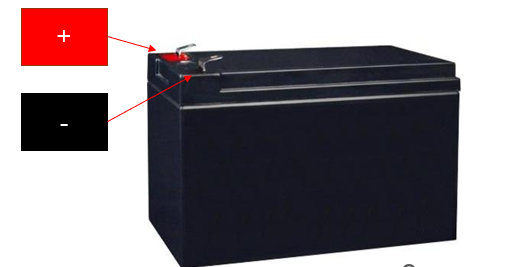
Q: How do I know which terminal is positive or negative? A: The positive terminal is marked with a + symbol and often coloured red; the negative terminal is marked with a – symbol and often coloured black.
Q: Do alarm systems need special batteries? A: Yes. Most alarm systems use 12V sealed lead acid (SLA) batteries, typically 7Ah. Confirm by checking your installers manual.
Q: Should I test the system after installing a new battery? A: Yes. Always run a system test to confirm the battery is charging and the device is functioning