
Spiderbite Response Guide: What to Do in an Emergency
Whether you are clearing out the garden shed, crawling under the house for a DIY plumbing fix, or reaching into a dark corner of the garage, encountering a spider is almost a rite of passage for any proactive homeowner. While most of these eight-legged neighbours are harmless, some carry venom that requires a fast, disciplined response.
When a “pinch” happens, the goal is to move from panic to protocol. Here is how to manage a spider bite effectively.
- Spiderbite Response Guide: What to Do in an Emergency
- Spider Bite First Aid (Treat the Person, not the bite)
- The Golden Rule
- Emergency Protocol: Funnel-Web and Mouse Spider Bites:
- Understanding the Reaction: What the Venom is Doing
- General First Aid (While awaiting medical help):
- Final Thoughts
- Key Examples of Venomous Spiders in Australia and South Africa
- Important Safety Note
- South African Spiders
- Brown Button Spider (Latrodectus geometricus)
- Six-Eyed Sand Spider (Sicarius spp.)
- Cape Wolf Spider (Lycosa spp.)
- Black Button Spider (Latrodectus mactans)
- Tarantula (Baboon Spider) (Hysterocrates spp.)
- Brown Recluse Spider (Loxosceles reclusa)
- Mouse Spider (Missulena spp.)
- Spitting Spider (Scytodes spp.)
- Jumping Spider (Salticidae family)
- False Widow Spider (Steatoda spp.)
- Australian Spiders
- Sydney Funnel-Web Spider (Atrax robustus)
- Redback Spider (Latrodectus hasselti)
- Mouse Spider (Missulena spp.)
- White-Tailed Spider (Lampona cylindrata and Lampona murina)
- Huntsman Spider
- Funnel-Web Spiders (Sydney & Tree-Dwelling) (Atrax robustus, Hadronyche spp.)
- Recluse Spider (Loxosceles rufescens)
- Trapdoor Spiders (Idiopidae family)
Spider Bite First Aid (Treat the Person, not the bite)
While prevention is key, knowing how to respond to a spider bite is crucial. Seek immediate medical attention for any suspected bite from a venomous spider.
The Golden Rule
In the heat of the moment, it is easy to obsess over the spider. However, the first step of first aid is always the C-A-B approach. Before looking at the wound, check the victim’s vitals:
C – Circulation: Check for signs of circulation or signs of life. If they are unresponsive and not breathing, begin CPR immediately.
A – Airway: Ensure the victim can breathe freely, and that their airway is clear.
B – Breathing: If the victim is not breathing or laboured, commence resuscitation and seek immediate medical help.
Emergency Protocol: Funnel-Web and Mouse Spider Bites:
If you suspect a bite from a Sydney Funnel-web or a Mouse Spider, time is your most valuable resource. These bites are life-threatening and require Pressure Immobilization, similar to a snakebite.
Immediate Steps:
Call 000 (Australia) or your local emergency services immediately.
Keep Still: The victim must lie down and remain completely calm. Movement speeds up the spread of venom through the lymphatic system.
The Bandage: Apply a firm, elasticized bandage (10–15 cm wide) directly over the bite site.
Immobilize: Wrap a second bandage from the fingers or toes upward, covering as much of the limb as possible. It should be firm—like a sprained ankle wrap—but not so tight that it cuts off blood flow. Use a splint to keep the limb from moving.
Mark the Spot: Note the time of the bite and mark the location on the outside of the bandage.
Understanding the Reaction: What the Venom is Doing
Spiders affect the body in different ways. By understanding the symptoms, you can better communicate with medical professionals.
Localized Pain and Swelling (Cytotoxic)
Common with Redbacks or Sac Spiders, this venom focuses on the tissue. You will likely experience intense, “stinging” pain, redness, and swelling.
- Action: Remove rings or watches near the bite (swelling can cut off circulation). Circle the bite area with a pen and write down the time. If the redness spreads beyond the circle, you know the reaction is progressing.
Systemic Weakness (Neurotoxic)
Venom from spiders like the Black Widow or Redback can also attack the nervous system. This leads to “progressive weakness”—you might feel muscle cramps, heavy sweating, or difficulty swallowing.
- Action: Keep the victim still and monitor for “systemic” signs like chest pain or difficulty breathing.
Bleeding and Severe Complications (Haemotoxic)
In rare cases involving aggressive species like the Brazilian Wandering Spider, venom can interfere with blood clotting. Watch for oozing at the bite site or, hours later, signs like nosebleeds or blood in the urine. This is a medical emergency.
General First Aid (While awaiting medical help):
For non-life-threatening bites (like common garden spiders), the goal is comfort and infection prevention:
Clean the Area: Wash thoroughly with soap and water.
Cold Therapy: Apply a cold pack wrapped in a cloth for 15 minutes. This reduces both pain and swelling.
Elevation: Keep the affected limb raised.
Pain Relief: Standard over-the-counter pain medication can help manage the ache.
Important Notes:
Do Not: Cut the bite, apply a tourniquet, or give the person food or drink.
Pressure Bandaging: Only use for funnel-web or mouse spider bites, not for other spider bites.
Catch the Spider: If safe, try to capture the spider for identification, but prioritize first aid and medical attention.
Seek Emergency Care:
Immediate medical attention is essential, especially for bites from neurotoxic spiders like the Funnel-Web or the Redback Spider, as antivenom may be required.
Final Thoughts
A spider bite can be alarming, but it is rarely fatal if handled with a cool head. If you are ever in doubt about the species, treat it as venomous. If it is safe to do so, take a quick photo of the spider for identification, but never put yourself at risk of a second bite to do so.
Note: If venom is ever sprayed or rubbed into the eyes, rinse immediately with water or milk and seek urgent medical care. Stay safe and keep your workspace clear!
Key Examples of Venomous Spiders in Australia and South Africa
In Australia:
- Redback Spider: Known for its potent neurotoxic venom, a bite from a Redback can lead to intense pain, muscle weakness, and in severe cases, paralysis. Immediate medical attention is necessary.
- Sydney Funnel-web Spider: One of the deadliest spiders in Australia, its venom can cause extreme pain, sweating, and muscle spasms, potentially leading to death if untreated.
- White-tailed Spider: While its bite is rarely fatal, it can cause significant tissue damage and pain, sometimes leading to ulceration at the bite site.
In South Africa:
- Black Widow Spider: With venom that can cause severe muscle pain, cramping, and, in rare cases, death, the bite of a Black Widow requires urgent medical care.
- Brown Button Spider: Its venom can cause localised pain, sweating, and nausea, and may lead to tissue necrosis in severe cases.
- Sac Spider: Known for its painful bite, it can cause necrosis and severe skin damage if not treated promptly.
Important Safety Note
- If venom gets into your eyes, immediately rinse with copious amounts of water or any neutral liquid (e.g., milk) and seek urgent medical attention.
- Do not rub your eyes, as this can cause more damage.
- Knowing these differences can be lifesaving.
South African Spiders
Brown Button Spider (Latrodectus geometricus)
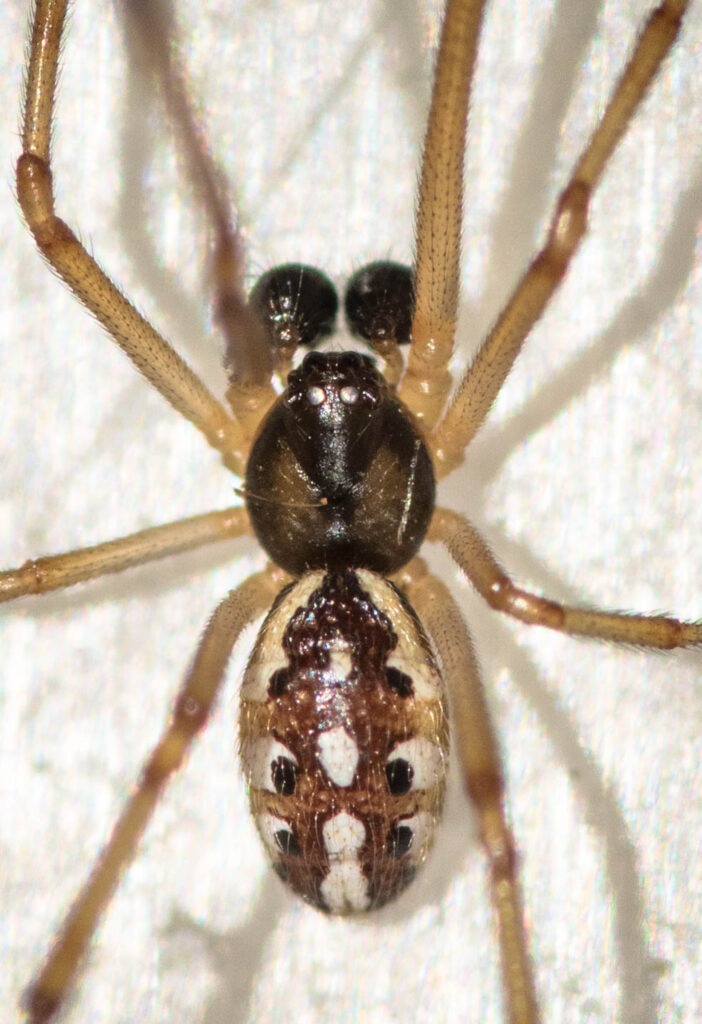
- Distribution: Found in parts of South Africa including the Cape Provinces, KwaZulu-Natal (KZN), Mpumalanga, Limpopo, and Gauteng.
- Colour: Black, brown, or olive with white throat bands or black and yellow/orange body bands with yellow throat bands.
- Length: 1.0-1.5 centimetres (leg span).
- Venom: Cytotoxic & Neurotoxic.
- Venom Effects: Progressive weakness and paralysis, along with painful progressive swelling at the bite site.
Six-Eyed Sand Spider (Sicarius spp.)
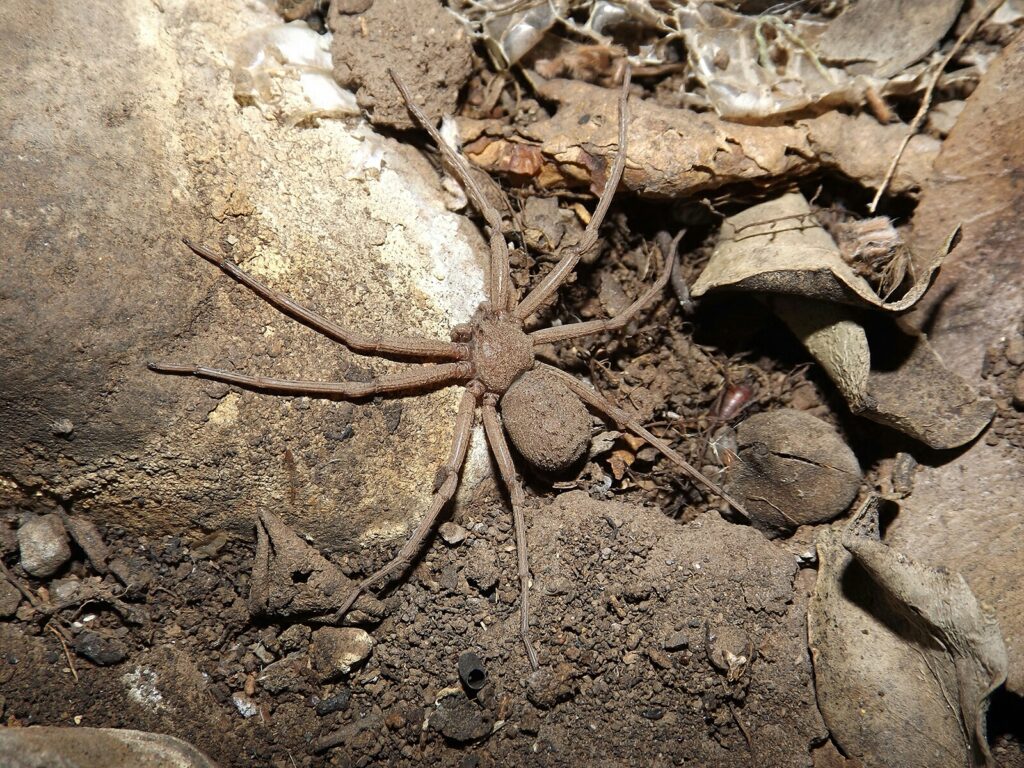
Distribution: Found in arid regions of South Africa, including parts of the Northern Cape and Western Cape.
- Colour: Pale brown or yellowish with a distinctive violin-like shape on the back.
- Length: Up to 4 cm body length, with long legs.
- Venom: Cytotoxic.
- Venom Effects: Severe necrosis and tissue destruction around the bite site, with possible systemic complications leading to shock if untreated.
Cape Wolf Spider (Lycosa spp.)
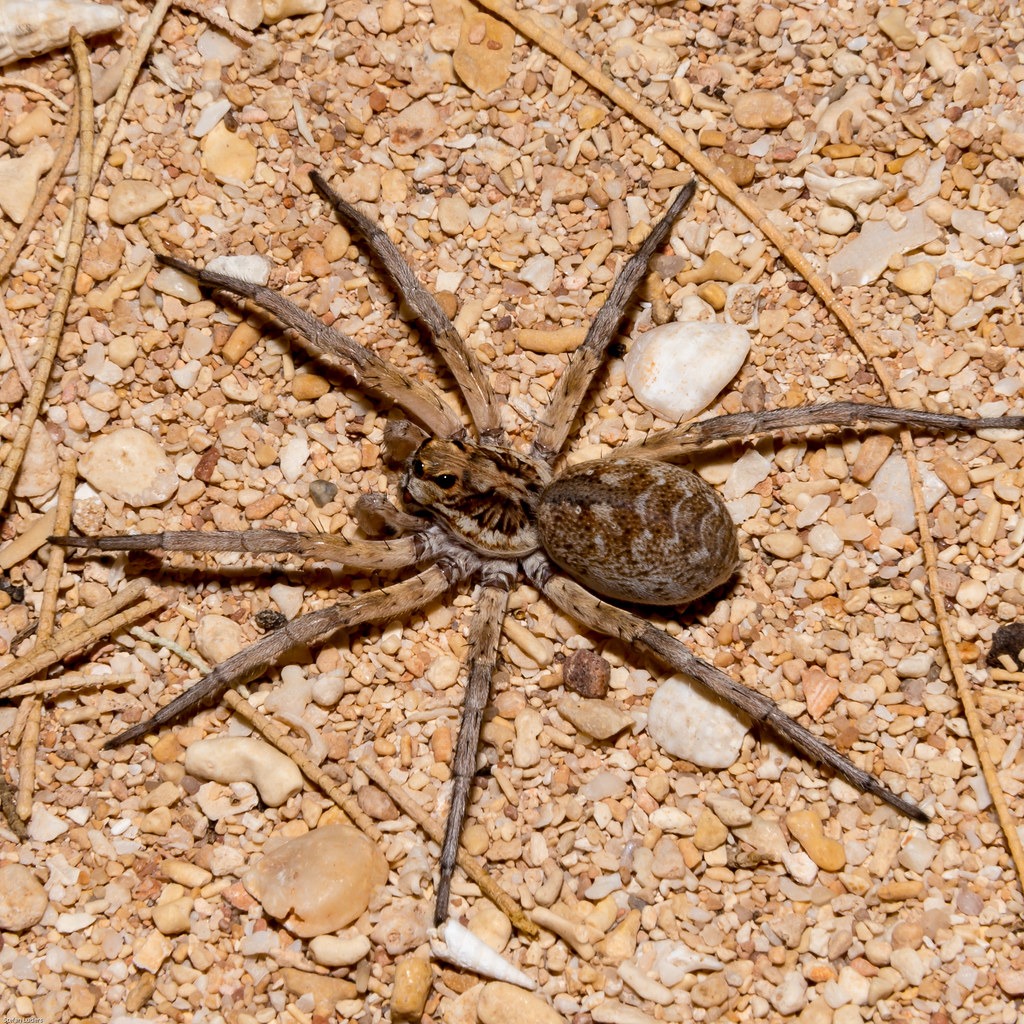
Distribution: Found in the Western Cape and parts of the Eastern Cape.
- Colour: Grey to brown, with darker markings and a wolf-like appearance.
- Length: Up to 2.5 cm body length, with long legs.Venom: Neurotoxic.
- Venom: Neurotoxic.
- Venom Effects: Pain, swelling, and muscle weakness in some cases.
Black Button Spider (Latrodectus mactans)
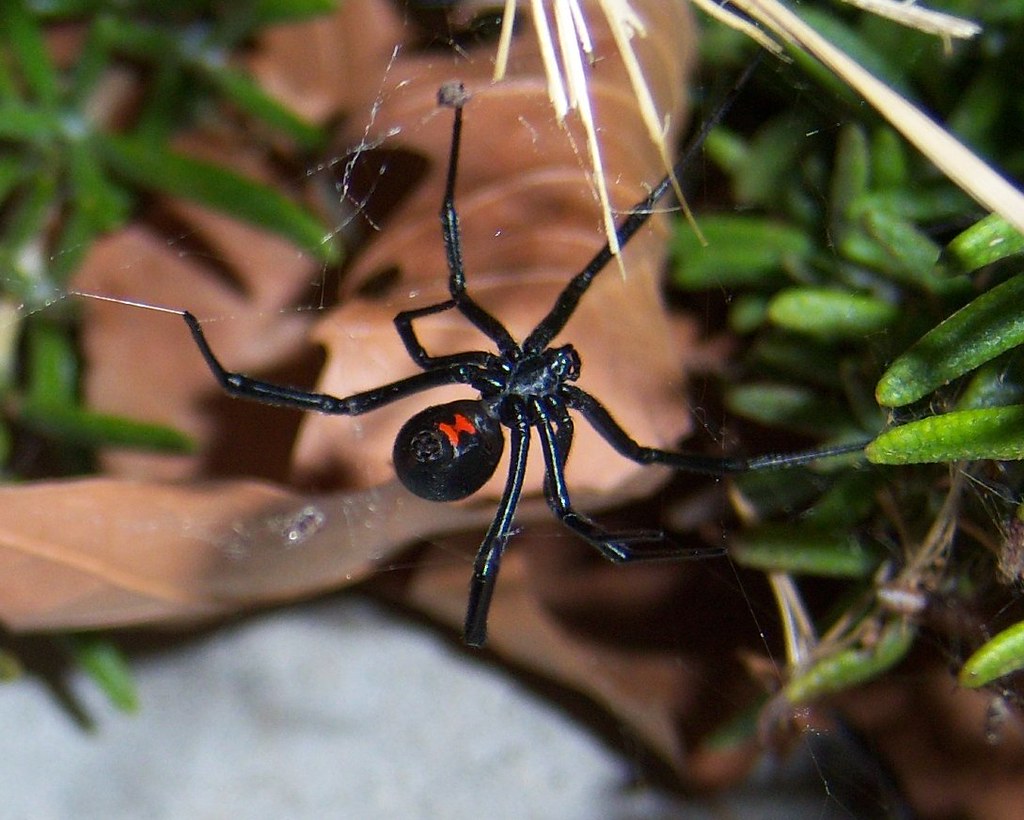
Distribution: Found in various regions of South Africa, including parts of Gauteng and KwaZulu-Natal.
- Colour: Glossy black with a distinctive red hourglass marking on the underside of the abdomen.
- Length: 1.5-2.5 cm body length.
- Venom: Neurotoxic.
- Venom Effects: Severe pain, muscle cramps, progressive weakness, and systemic symptoms like nausea, sweating, and respiratory distress.
Tarantula (Baboon Spider) (Hysterocrates spp.)
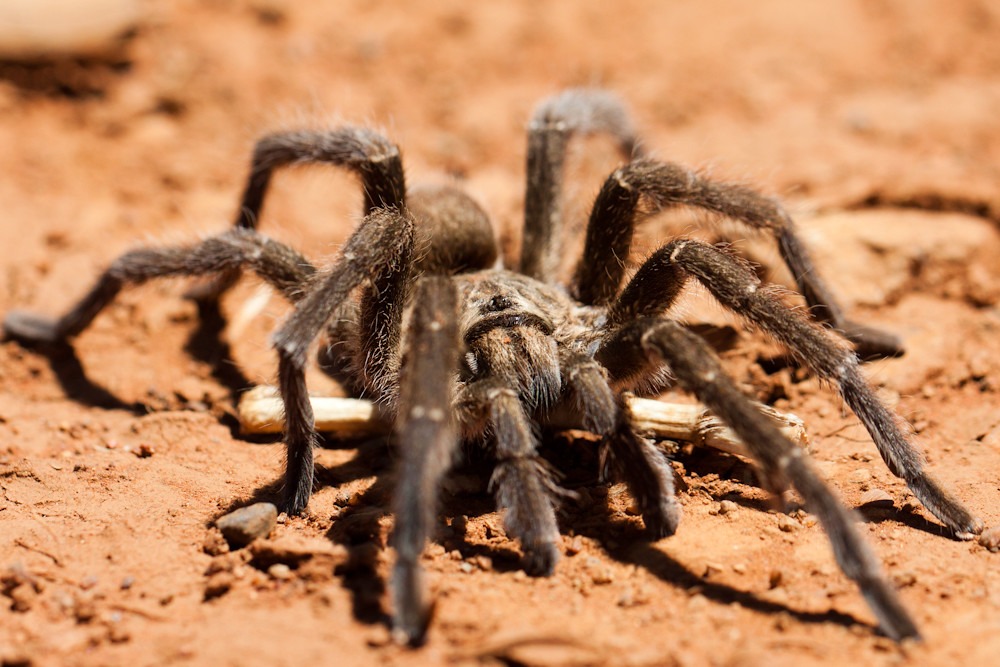
Distribution: Found in various regions, including parts of Gauteng, Limpopo, and the Eastern Cape.
- Colour: Typically brown or black with a hairy body.
- Length: 10-15 cm body length, with a leg span of up to 20 cm.
- Venom: Mildly toxic (affects small prey).
- Venom Effects: Causes mild swelling and pain at the bite site, but generally not dangerous to humans.
Brown Recluse Spider (Loxosceles reclusa)
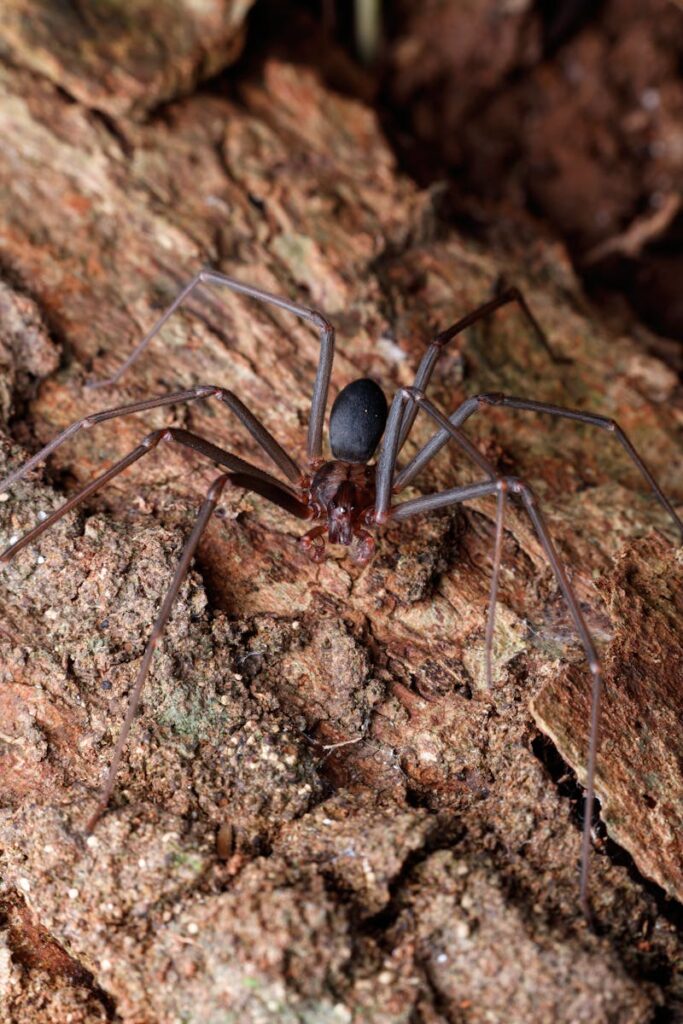
Distribution: While rare in South Africa, it can be found in some areas, particularly in warmer regions.
- Colour: Light brown with a characteristic violin-shaped marking on the back.
- Length: 1-2 cm body length.
- Venom: Cytotoxic.
- Venom Effects: Necrosis of tissue at the bite site, leading to ulceration and, in severe cases, systemic complications.
Mouse Spider (Missulena spp.)
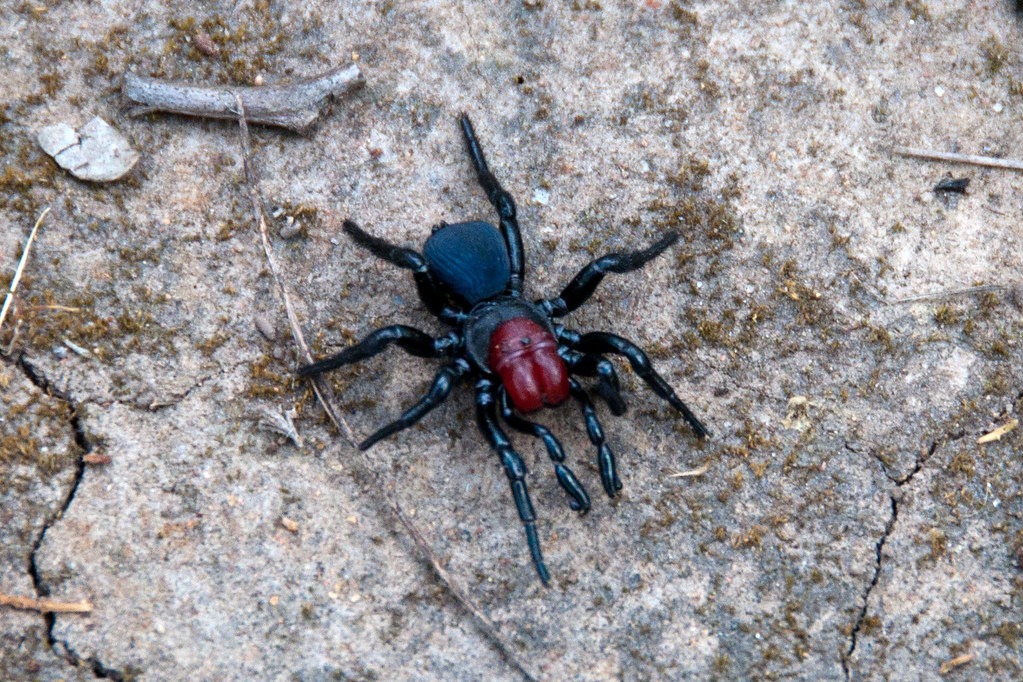
Distribution: Found in various regions of South Africa, including the Eastern Cape and Western Cape.
- Colour: Black to dark brown with a large, muscular appearance.
- Length: 3-4 cm body length.
- Venom: Neurotoxic.
- Venom Effects: Causes severe pain and swelling at the bite site, with potential for systemic effects like nausea and dizziness.
Spitting Spider (Scytodes spp.)
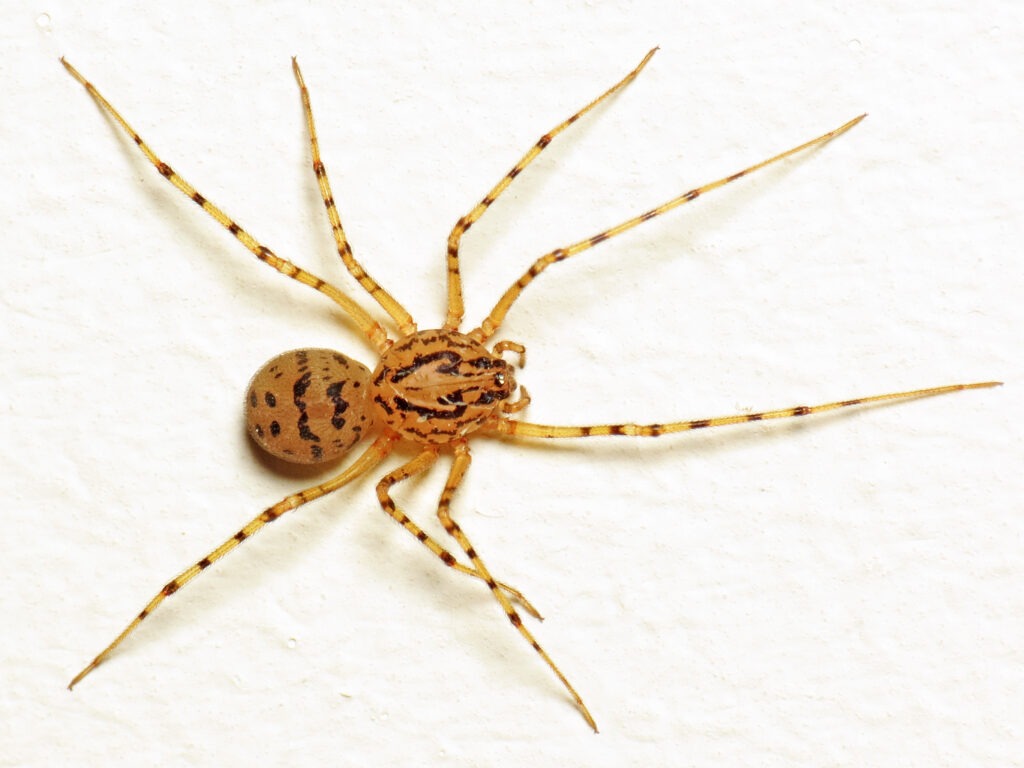
Distribution: Found in parts of South Africa, including the Cape Provinces and KZN.
- Colour: Yellowish to light brown with dark markings.
- Length: 1.5-2 cm body length.
- Venom: Cytotoxic & neurotoxic.
- Venom Effects: The venom can cause pain and swelling, and in rare cases, systemic symptoms.
Jumping Spider (Salticidae family)
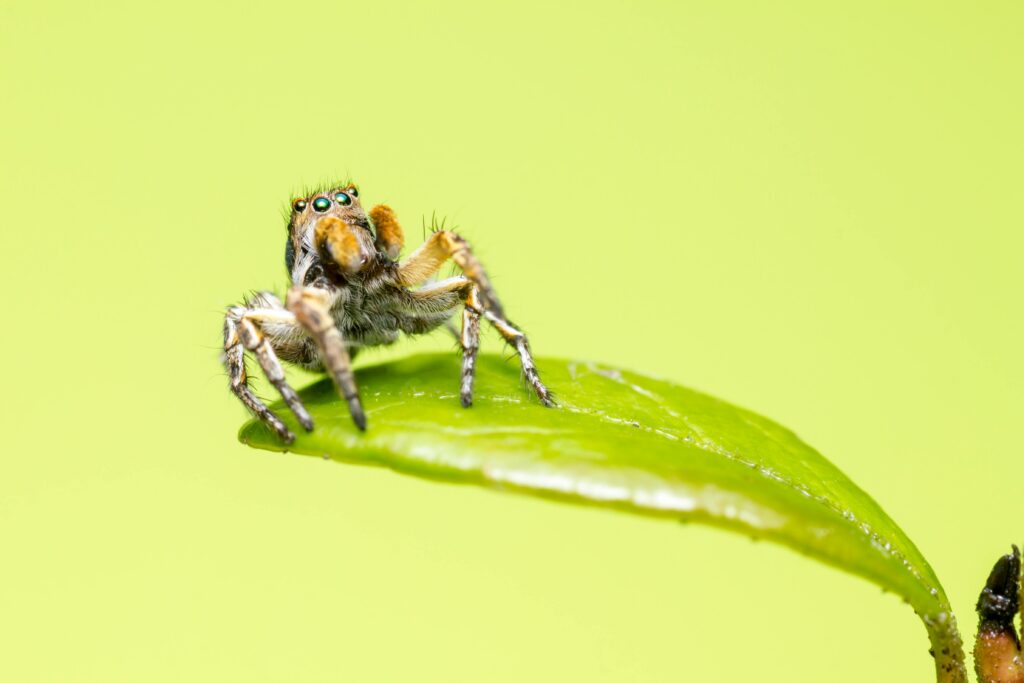
Distribution: Found across South Africa in various habitats, including gardens and forests.
- Colour: Varies widely; generally brown or grey with white markings.
- Length: 1-2 cm body length.
- Venom: Mildly toxic.
- Venom Effects: Causes mild local pain and swelling but is not considered dangerous to humans.
False Widow Spider (Steatoda spp.)
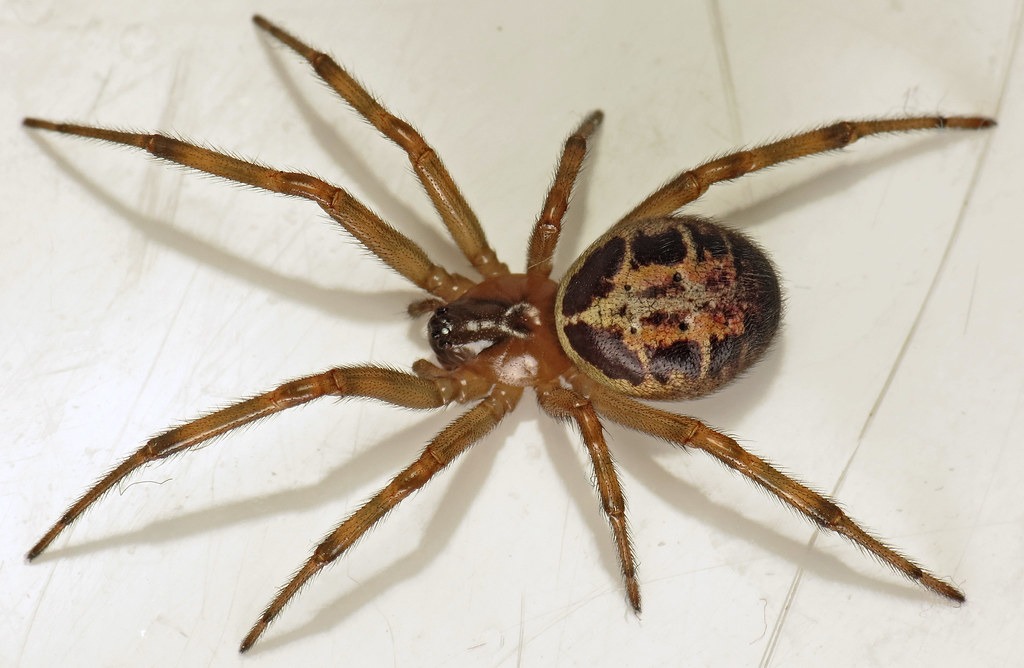
Distribution: Found in South Africa, particularly around urban areas.
- Colour: Dark brown or black with a lighter pattern on the abdomen, resembling a widow spider.
- Length: 1.5-2 cm body length.
- Venom: Mildly neurotoxic.
- Venom Effects: Causes pain and swelling at the bite site, with occasional systemic effects like headaches or nausea.
Australian Spiders
Sydney Funnel-Web Spider (Atrax robustus)
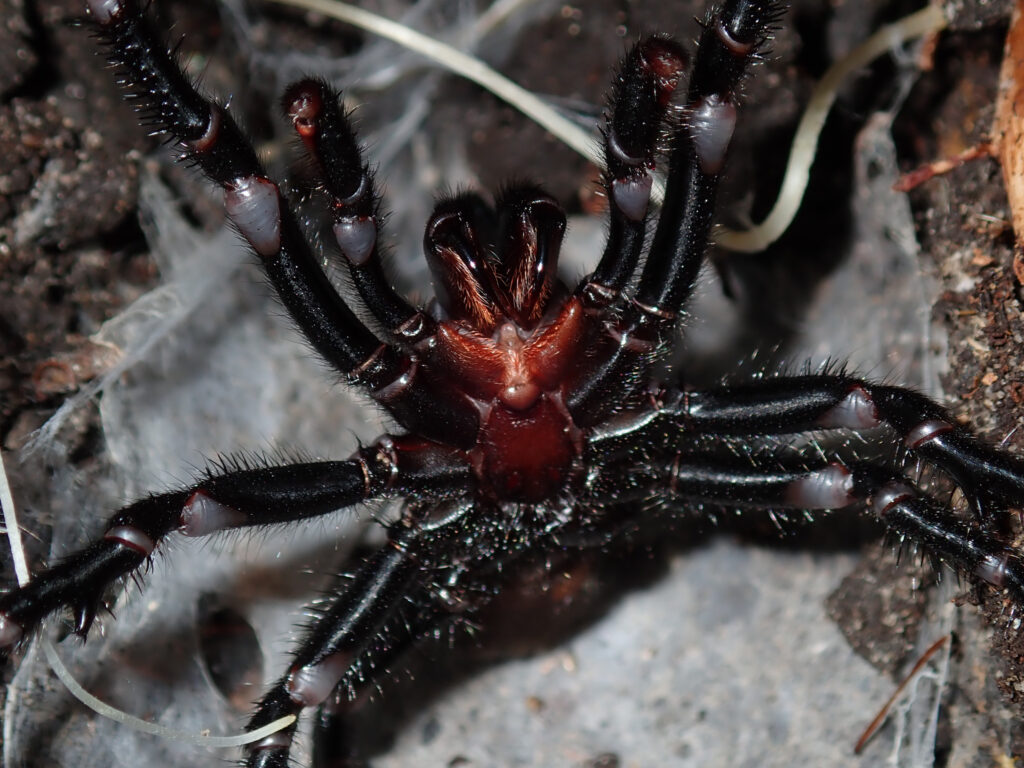
Distribution: Eastern Australia, especially in Sydney and surrounding areas.
- Color: Glossy black or dark brown with a shiny carapace.
- Length: 1.5–3.5 cm (body length).
- Venom: Highly venomous; neurotoxic.
- Venom Effects: Can cause severe systemic symptoms, including muscle spasms, breathing difficulties, and potentially death if untreated.
Redback Spider (Latrodectus hasselti)
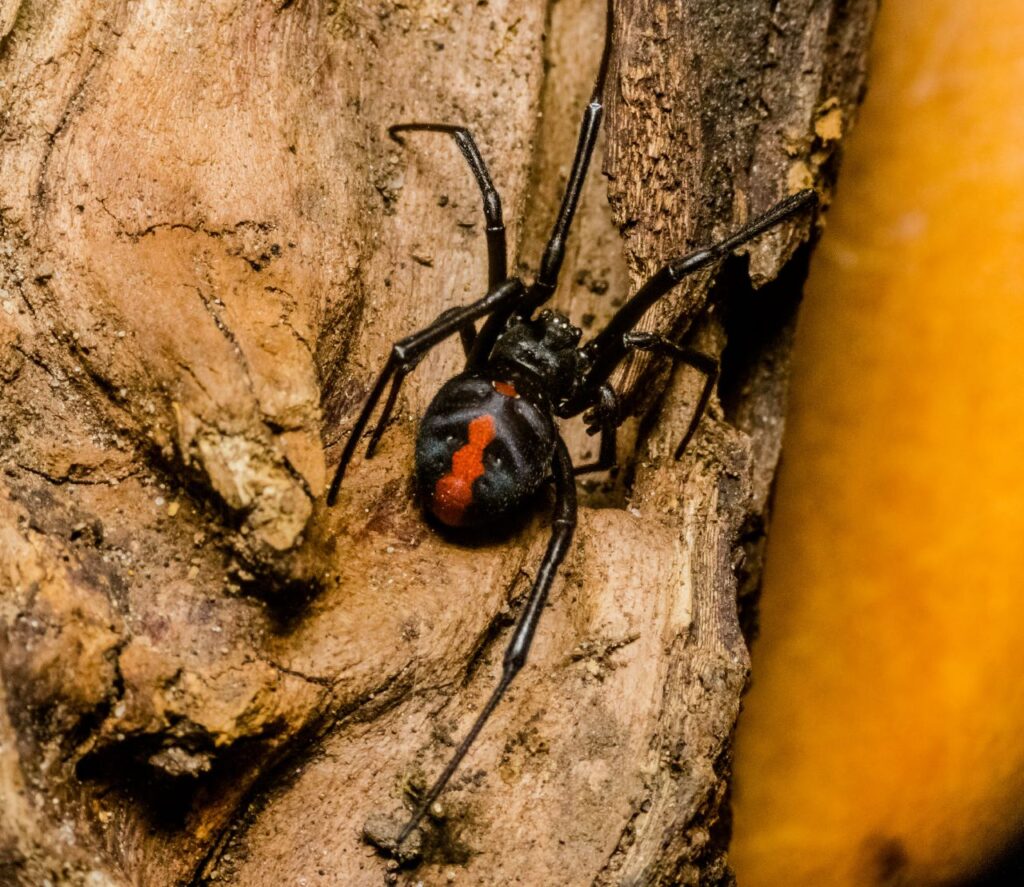
Distribution: Found across Australia, often in urban areas, under furniture, and in sheds.
- Color: Black body with a prominent red stripe along the abdomen (females).
- Length: Females: 1–1.5 cm; Males: 3–4 mm.
- Venom: Neurotoxic.
- Venom Effects: Severe pain, sweating, nausea, and, in rare cases, systemic symptoms like paralysis or death (more dangerous to children and the elderly).
Mouse Spider (Missulena spp.)
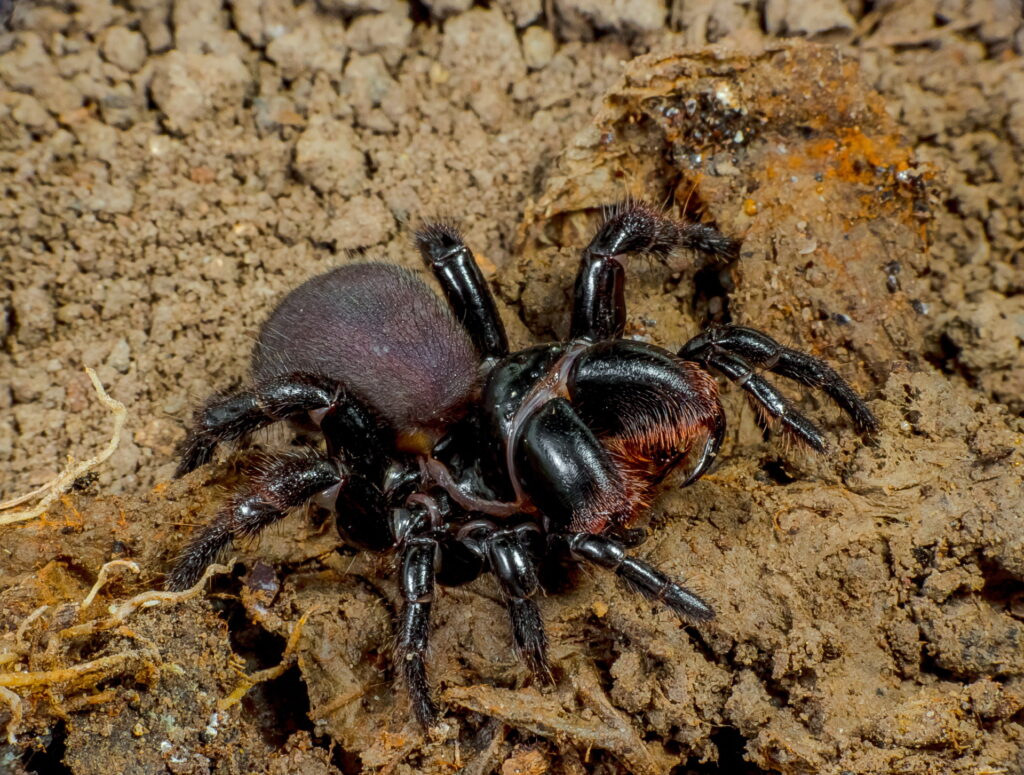
Distribution: Various species found across Australia, often near water.
- Color: Black or dark brown, sometimes with a reddish head or thorax.
- Length: 1–3 cm (body length).
- Venom: Similar to Funnel-Web venom (neurotoxic), but bites are rare.
- Venom Effects: Symptoms may include localized pain, muscle twitching, and mild neurological effects.
White-Tailed Spider (Lampona cylindrata and Lampona murina)
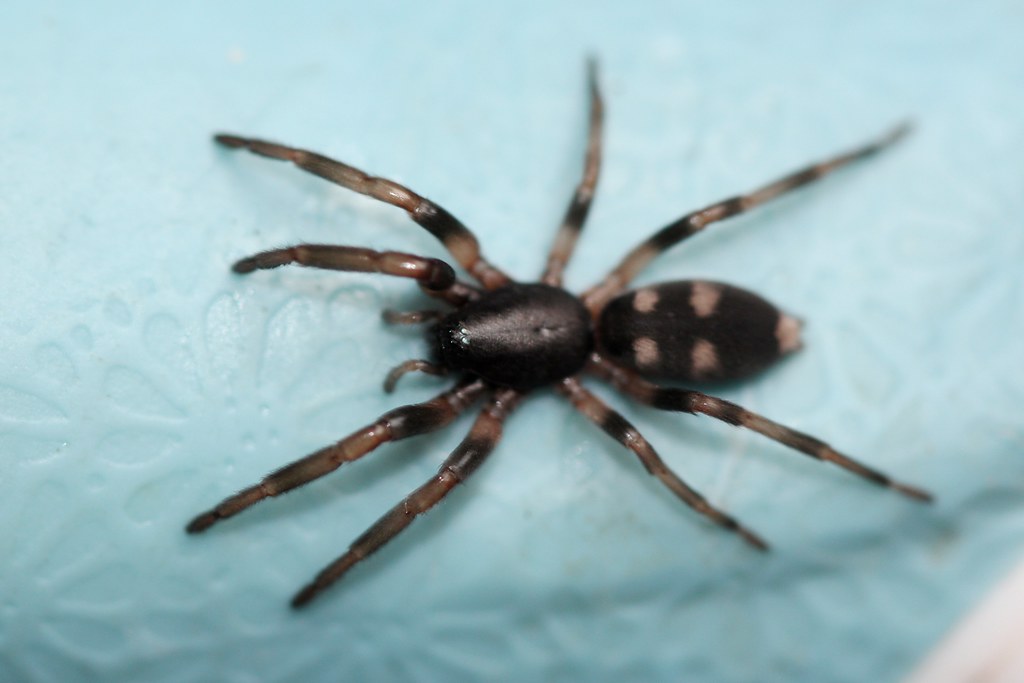
Distribution: Found throughout southern and eastern Australia.
- Color: Grey to black with a distinctive white patch at the tip of their abdomen.
- Length: 12 to 20 mm in body length.
- Venom: Low toxicity.
- Venom Effects: Bites typically cause temporary symptoms, including:
- Mild to moderate pain or discomfort, Swelling, skin irritation with a visible red mark. Itchiness with a visible red mark.
Huntsman Spider
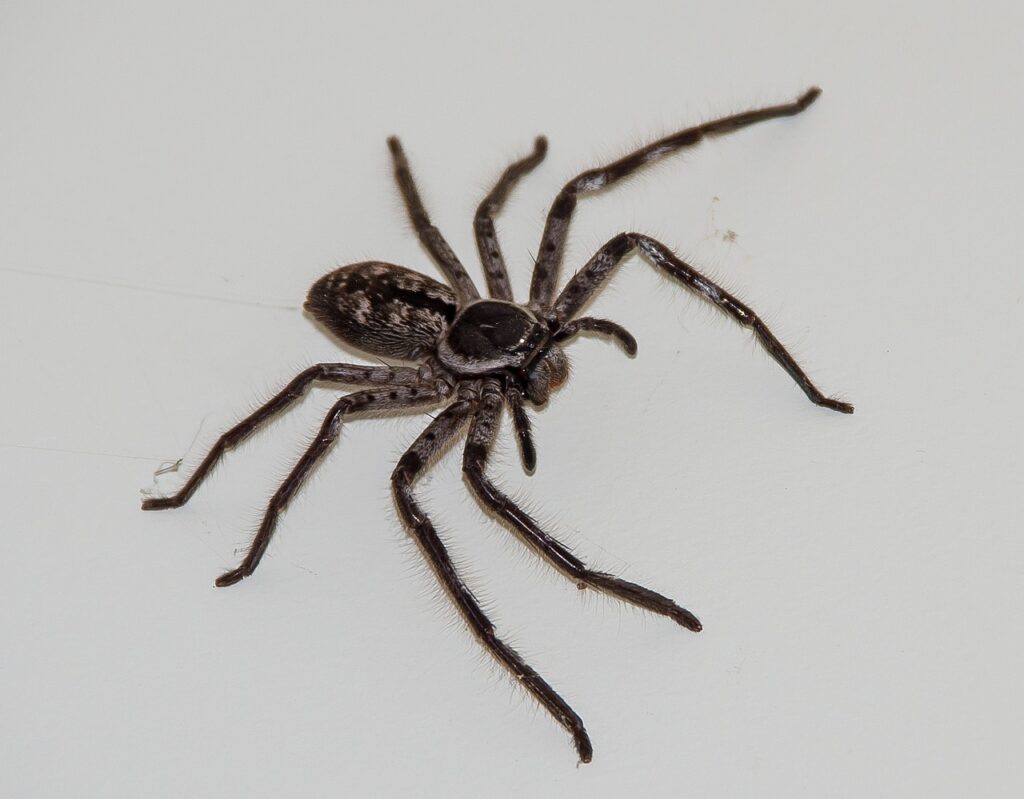
Distribution: Found throughout Australia in various habitats.
- Color: Grey to brown, often with flattened bodies.
- Length: Up to 15 cm leg span.
- Venom: Low Toxicity.
- Venom Effects: Bites are generally not dangerous and cause only minor local pain and swelling.
Funnel-Web Spiders (Sydney & Tree-Dwelling) (Atrax robustus, Hadronyche spp.)
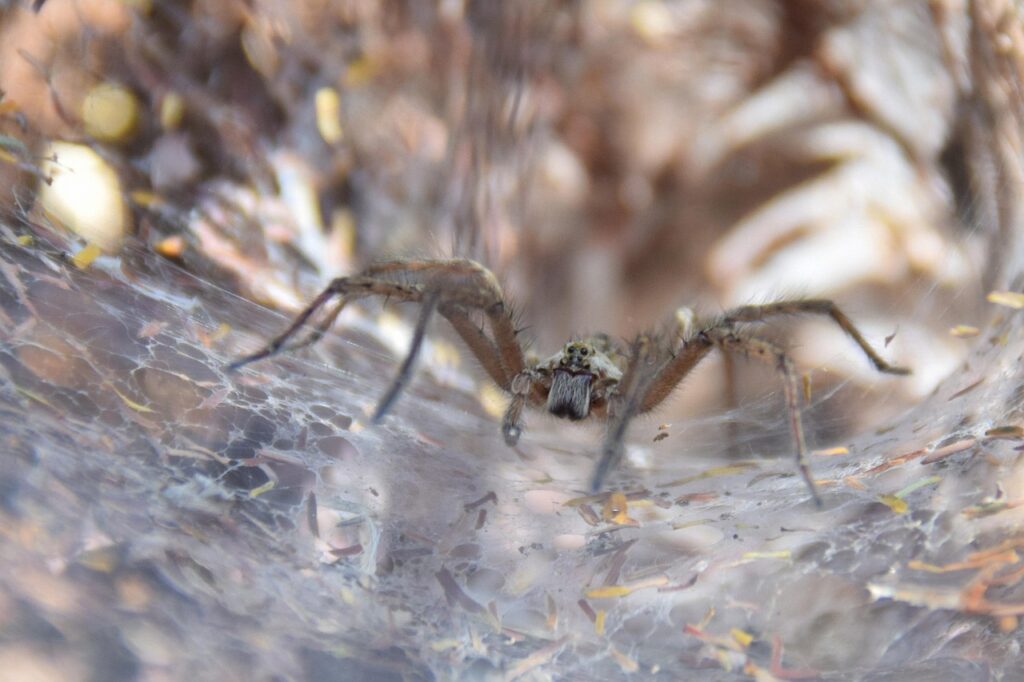
Distribution: Found in New South Wales, Queensland, Victoria, and South Australia, primarily in moist environments such as gardens, forests, and under logs.
- Color: Glossy black cephalothorax with a dark brown to black abdomen.
- Length: 1.5–5 cm body length, with a leg span up to 7 cm.
- Venom: Highly toxic neurotoxin (δ-atracotoxin), especially in males.
- Venom Effects: Causes severe pain, muscle spasms, breathing difficulties, sweating, and potential death if untreated. Antivenom is available and highly effective.
Recluse Spider (Loxosceles rufescens)
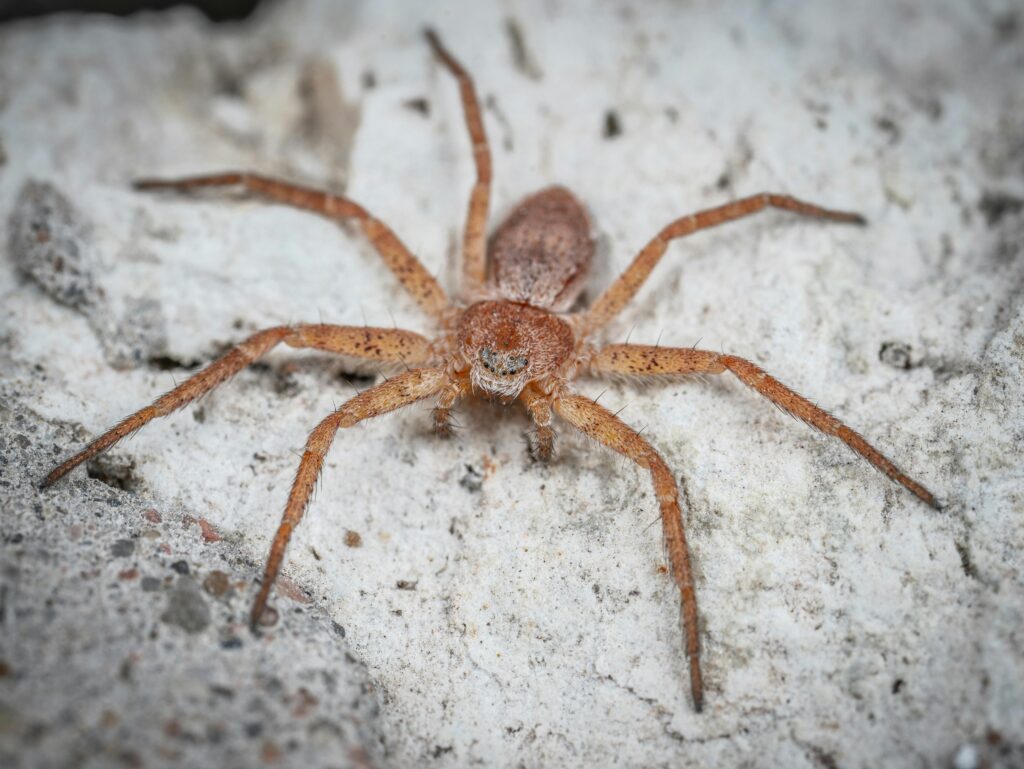
Distribution: Found in urban areas, sheds, basements, and under furniture across Australia, but not commonly encountered.
- Color: Light to dark brown, with a violin-shaped marking on the cephalothorax.
- Length:6–20 mm (0.6–2 cm) body length, with a leg span of up to 5 cm.
- Venom: Necrotic venom that can cause skin damage.
- Venom Effects: Bites may lead to redness, swelling, and ulceration in rare cases. While most bites heal on their own, severe necrosis can occur in sensitive individuals.
Trapdoor Spiders (Idiopidae family)
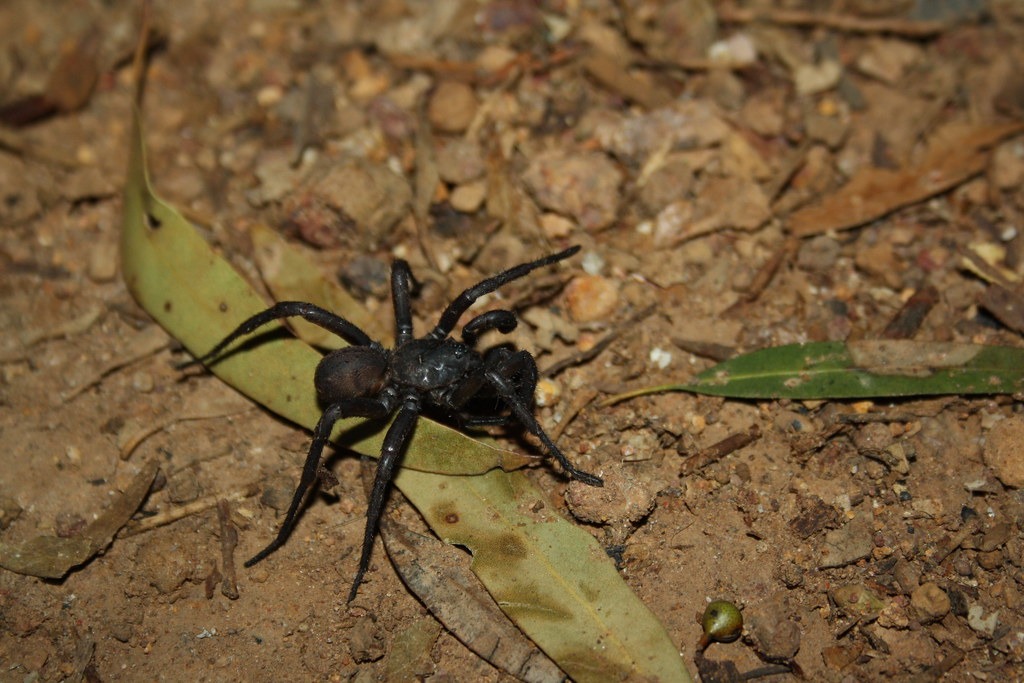
Distribution: Found throughout Australia, particularly in gardens, lawns, forests, and woodlands. They are burrowing spiders, often found in areas with loose soil or under rocks.
- Color:Brown to grey, with a slightly lighter abdomen. Their bodies are often covered in fine hairs.
- Length:2–3 cm body length, with a leg span of up to 5 cm.
- Venom: Mild to moderate toxicity, mainly used to immobilize prey.
- Venom Effects: Bites are generally not dangerous to humans but may cause pain, swelling, and redness. In rare cases, bites can lead to mild to moderate symptoms such as nausea or dizziness.