
Snakebite Response Guide: What to Do in an Emergency
Snakebites can be a serious medical emergency, especially when the snake involved is venomous. In countries like Australia and South Africa, where dangerous species are present, knowing how to respond quickly and effectively is essential. This guide will help you understand what to do in the event of a snakebite and how to potentially save a life.
- Snakebite Response Guide: What to Do in an Emergency
- Treatment by Venom Syndrome
- Final Thoughts
- Key Examples of Venomous Snakes in Australia and South Africa
- EYE CARE
- South African Snakes
- Rinkhals (Hemachatus haemachatus)
- Puff Adder (Bitis arietans)
- Gaboon Adder (Bitis gabonica)
- Black Mamba (DENDROASPIS polylepis)
- Green Mamba (DENDROASPIS angusticeps)
- Mozambique Spitting Cobra(NAJA mossambica)
- CAPE COBRA (NAJA nivea)
- Snouted Cobra (NAJA annulifera)
- Forest Cobra (NAJA subfulva)
- Boomslang (DISPHOLIDUS typus)
- Vine Snake (THELOTORNIS capensis)
- Stiletto Snake (ATRACTASPIS bibronii)
- Night Adder (CAUSUS rhombeatus)
- Australian Snakes
- Eastern Brown Snake (Pseudonaja textilis)
- Inland Taipan (Oxyuranus microlepidotus)
- Coastal Taipan (Oxyuranus scutellatus)
- Tiger Snake (Notechis scutatus)
- Death Adder (Acanthophis spp.)
- Mulga Snake (King Brown Snake) (Pseudechis australis)
- Red-bellied Black Snake (Pseudechis porphyriacus)
- Small-eyed Snake (Cryptophis nigrescens)
- Western Brown Snake (Pseudonaja mengdeni)
Step 1: Scene Safety First
Before assisting anyone with a snakebite, it’s essential to ensure the scene is safe. Take precautions to avoid a second bite to yourself or others. Keep a safe distance from the snake if it’s still nearby.
Step 2: Assess the Victim : C-A-B Approach
Focus on Circulation, Airway, and Breathing (C-A-B). Provide necessary life-saving interventions if there are any issues with breathing or circulation.
C – Circulation: Check for signs of circulation. If necessary, begin CPR or apply pressure to stop bleeding.
A – Airway: Ensure the victim can breathe freely.
B – Breathing: If the victim is not breathing, commence resuscitation and seek immediate medical help.
Treatment by Venom Syndrome
Cytotoxic Bites (Tissue-Damaging Venom)
Commonly seen with species like the Eastern Brown Snake (Australia) or the Puff Adder (South Africa), cytotoxic venom causes intense pain, swelling, and tissue damage. Cytotoxic venom can cause significant tissue damage, swelling, and pain at the bite site. Here’s how to handle it:
Remove Constricting Items: Rings, bracelets, watches, or tight clothing near the bite should be removed immediately to prevent complications from swelling.
Mark the Swelling: Use a pen to circle the bite area if visible and record the time of the bite on the skin. As swelling progresses, continue marking the area and document its spread.
Elevation: Keep the affected limb or area elevated to reduce swelling.
Seek Rapid Medical Care: Transport the victim to the nearest hospital as quickly as possible.
Neurotoxic Bites (Nervous System-Affecting Venom)
Neurotoxic venom can impact the nervous system, leading to muscle paralysis and difficulty breathing. Drooping eyelids, slurred speech, difficulty breathing or bleeding from the gums are all symptoms that can occur.
Neurotoxic venom can also cause paralysis and other severe symptoms.
Dangerous neurotoxic species include the Black Mamba and Cape Cobra (South Africa), as well as the Taipan and Tiger Snake (Australia).
Swelling due to cytotoxic venom starting at the bite site and progressing up the limb.
Immense pain with the affected area being warm and hard.
Complications include blistering, bleeding under the skin, necrosis, pseudo compartment syndrome, nerve and vessel entrapment, deep vein thrombosis, hypotension, and hypovolaemic shock.
Species responsible: Puff Adder, Gaboon Adder, some of the dwarf Adder species, Spitting Cobras (Mozambique Spitting Cobra & Black Spitting Cobra), Stilleto Snakes, and Night Adders.
Neurotoxic Snakebites: Special Considerations
Pressure Immobilization Technique (PIT): This is critical, apply a broad, firm bandage over the bite site, then wrap the entire limb, starting from fingers/toes up towards the torso.
Splint the Limb: Immobilise the joint above or below the bite.
Stay Still: Movement accelerates the venom spread. Bring transport to the victim.
Haemotoxic Bites (Hemotoxic)
History may include need for the snake to be “pulled off” the bite site (back-fanged). The snake holds or bites into your leg, with its fangs digged into your body. Bleeding tendencies are caused by haemotoxic venom.
This syndrome eventually leads to widespread internal bleeding. Bite site bleeding early on
Later complications include Haematuria, haemoptysis, melena, epistaxis, cerebral haemorrhage, hypotension, and hypovolaemic shock. (12-36 hours).
Species responsible: Boomslang and Vine Snakes (South Africa)
First Aid for Neurotoxic Snake bites
Apply a Pressure Bandage: This is crucial for neurotoxic bites to slow venom spread but ensure adequate circulation at the end of the limb. Check frequently for circulation and loosen if necessary.
Apply a Pressure Bandage: In the case of neurotoxic bites, such as those from the Black Mamba or Taipan, a pressure bandage can slow the venom’s spread. Ensure the bandage is snug but not cutting off circulation. Always check that circulation remains intact at the farthest point of the limb (e.g., fingers or toes).
Tourniquets (Use Only When Absolutely Necessary): A tourniquet may be used if a pressure bandage is unavailable, and you’re more than 90 minutes from medical help. For a confirmed Black Mamba or Cape Cobra bite, apply the tourniquet above the bite site and replace it with a commercial tourniquet if one is available. DO NOT remove the tourniquet unless severe swelling occurs.
Seek Immediate Medical Help: Neurotoxic venom acts quickly, and time is critical. Get the victim to a hospital as soon as possible.
Final Thoughts
Snakebites can be frightening, but staying calm and following these steps can significantly improve the outcome. Always prioritize getting to a medical facility for professional care and treatment.
General Snakebite First Aid Tips:
Stay Calm: Keeping the victim calm is key. Anxiety can speed up the spread of venom.
Minimize Movement: Have the victim lie down and stay still to slow the circulation of venom.
Monitor for Changes: Keep an eye out for symptoms such as difficulty breathing, excessive swelling, or loss of muscle control.
Key Examples of Venomous Snakes in Australia and South Africa
In Australia:
Eastern Brown Snake: One of the deadliest snakes in the world, it is responsible for most snakebite fatalities in Australia. Its venom can cause paralysis and death if untreated.
Taipan: Known for its fast-acting venom, the inland Taipan’s bite is highly neurotoxic and requires immediate treatment.
Tiger Snake: Found in coastal areas, its venom contains both neurotoxic and coagulant properties, affecting the nervous system and blood clotting.
In South Africa:
Black Mamba: Possibly the most feared snake in the world, the Black Mamba’s venom is highly neurotoxic and can kill within hours if untreated.
Puff Adder: Known for its slow strike, the Puff Adder’s venom is cytotoxic, causing severe swelling and tissue damage.
Cape Cobra: Another neurotoxic species, its venom causes paralysis and respiratory failure, which can be fatal without prompt treatment.
EYE CARE
In both Australia and South Africa, certain types of snakes have evolved the unique and dangerous ability to spit venom as a form of self-defense, particularly aiming for the eyes of perceived threats. This behavior can cause extreme pain, inflammation, and even blindness if not treated promptly.
South African Spitting Snakes
Mozambique Spitting Cobra (Naja mossambica): This cobra is one of the most common spitting cobras in Africa, including South Africa. It can eject venom accurately up to 2-3 meters and often aims for the eyes.
Black-Necked Spitting Cobra (Naja nigricollis): Found in some parts of South Africa, this snake is capable of spraying venom with great precision at a perceived threat’s face and eyes.
Rinkhals (Hemachatus haemachatus): Also known as the ring-necked spitting cobra, this snake is unique because it can play dead as well as spit venom when threatened. It’s found mainly in South Africa.
Australian Spitting Snakes
Australia does not have true spitting cobras like Africa and Asia, but it does have the Australian Mulga Snake (Pseudechis australis), which can sometimes “bluff spit” venom or spray droplets defensively during strikes. This behavior, however, is less specialized compared to the true spitting cobras of Africa and does not involve precise targeting of the eyes like their African counterparts.
Immediate Eye Care for Snake Venom Exposure
When venom from a spitting snake gets into the eyes, acting quickly is essential to minimize pain and potential long-term damage. Here’s how to manage this emergency:
Step 1: Flush the Eyes
Use a Bland Liquid: Immediately flush the affected eye(s) with a bland liquid, ideally 0.9% Sodium Chloride (saline solution). Continue flushing thoroughly to remove as much venom as possible.
Alternative Options: If saline isn’t available, use clean water or any neutral, non-irritating liquid to rinse the eyes thoroughly.
Step 2: Provide Comfort and Protect the Eyes
Avoid Rubbing the Eyes: Rubbing can worsen irritation and spread the venom.
Cover the Eyes: Light sensitivity may occur, so gently cover the eyes with a loose bandage or cloth to shield them from bright light.
Step 3: Seek Medical Attention
Transport to a Hospital: Immediate professional medical assessment and care are necessary to prevent complications and manage symptoms effectively.
This step-by-step guide will help reduce the immediate impact of venom exposure while ensuring proper follow-up care.
Important Safety Note
If venom gets into your eyes, immediately rinse with copious amounts of water or any neutral liquid (e.g., milk) and seek urgent medical attention.
Do not rub your eyes, as this can cause more damage.
Knowing these differences can be lifesaving, especially in regions where encounters with spitting snakes are possible!
South African Snakes
Rinkhals (Hemachatus haemachatus)
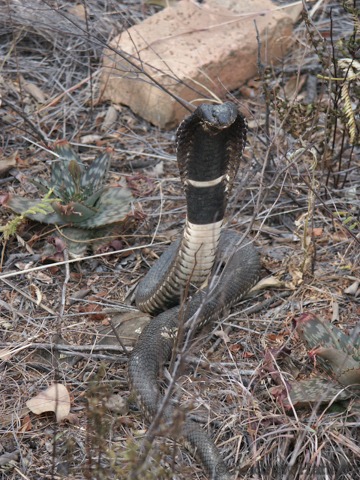
Distribution: South Africa Parts of the Cape Provinces, KZN,
Mpumalanga, Limpopo and Gauteng
- Colour: Black, brown or olive with white throat bands or black
and yellow/orange body bands with yellow throat bands - Length: 1.0-1.5m
- Venom: Cytotoxic & Neurotoxic
- Venom Effects: Progressive Weakness and Paralysis along with Painful Progressive Swelling
Puff Adder (Bitis arietans)
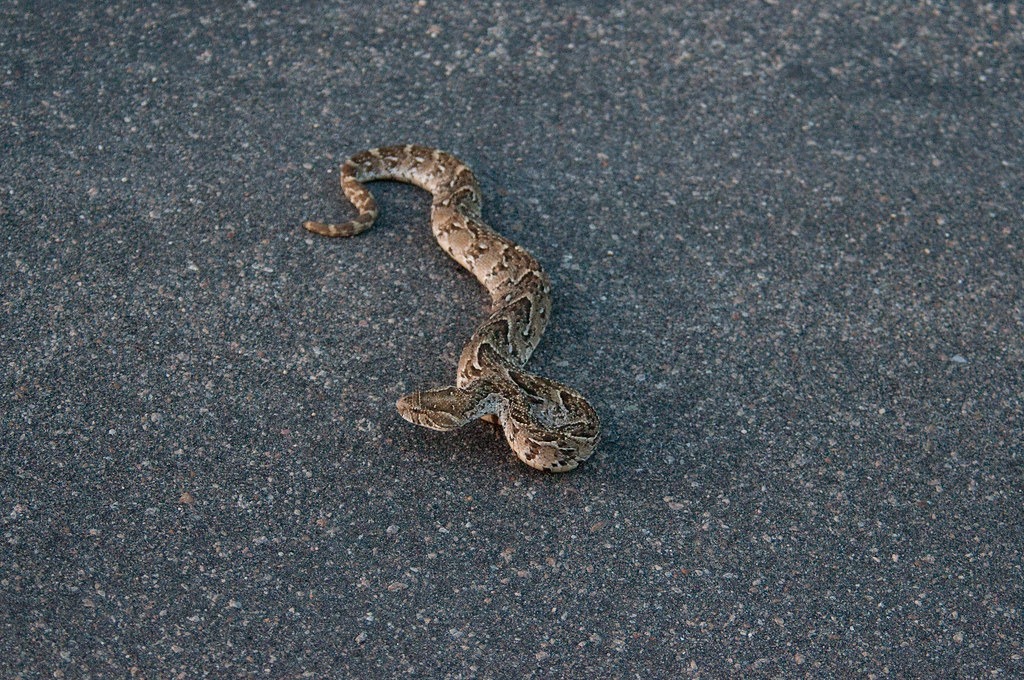
Distribution: South Africa Throughout South Africa
- Colour: Colour varies but has V-shaped markings down the
back pointing towards the tail - Length: 0.9-1.2m but up to 1.4m
- Venom: Cytotoxic
- Venom Effects: Mixed Painful Progressive Swelling & Bleeding
Gaboon Adder (Bitis gabonica)
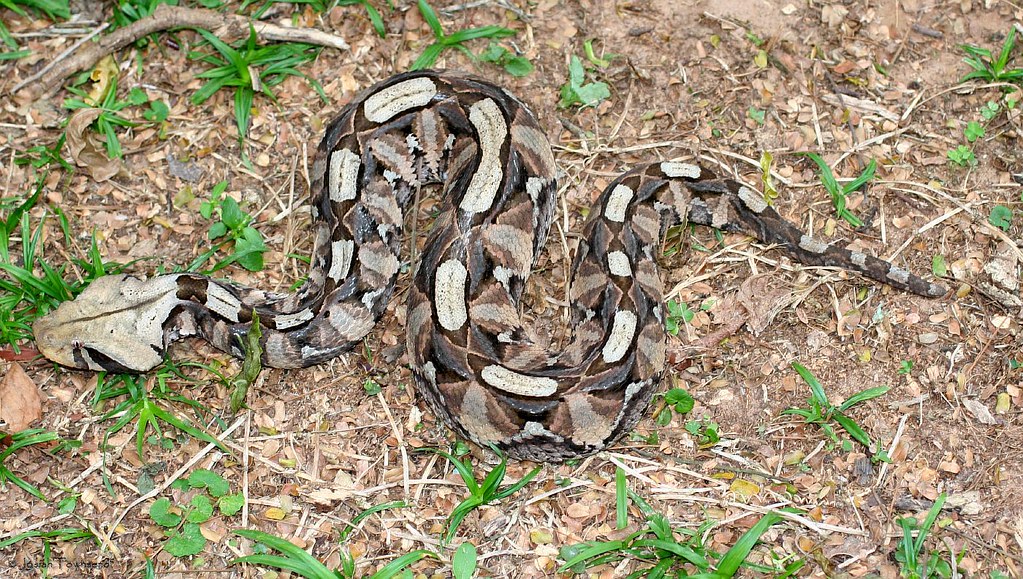
Distribution: South Africa – Coastal Northern KZN
- Colour: Various shades of pastel colours with blocks along the back and triangles down the sides
- Length: 1.2m can get bigger
- Venom: Cytotoxic
- Venom Effects: Mixed Painful Progressive Swelling & Bleeding
Black Mamba (DENDROASPIS polylepis)
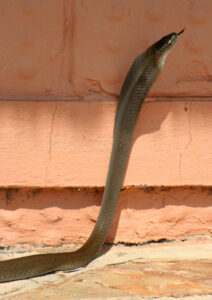
Distribution: South Africa – Parts of KZN, Limpopo and Mpumalanga
- Colour: Dark Olive, greyish brown or gunmetal grey
- Length: 2.8-3.2m but up to 4.5m
- Venom: Neurotoxic
- Venom Effects: Progressive Weakness and
Paralysis with or without minor swelling
Green Mamba (DENDROASPIS angusticeps)
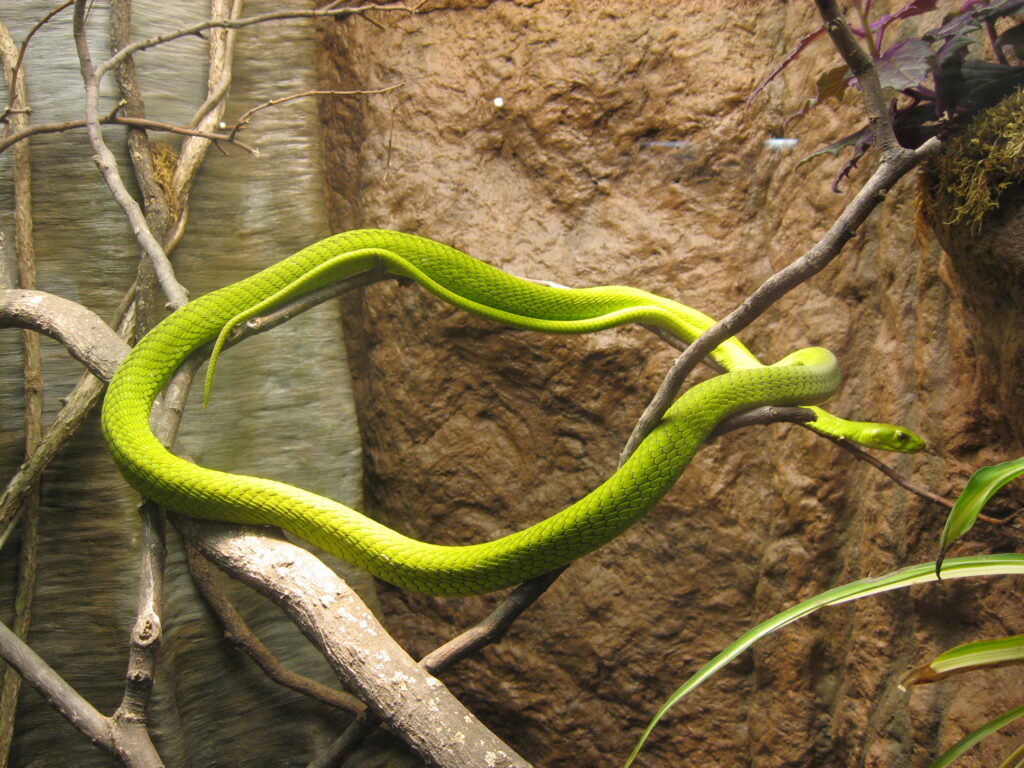
Distribution: South Africa KZN along the coastal forests
- Colour: Uniform green with irregular yellow scales
- Length: 1.8-2.5m
- Venom: Neurotoxic
- Venom Effects: Progressive Weakness and Paralysis with
or without minor swelling
Mozambique Spitting Cobra(NAJA mossambica)
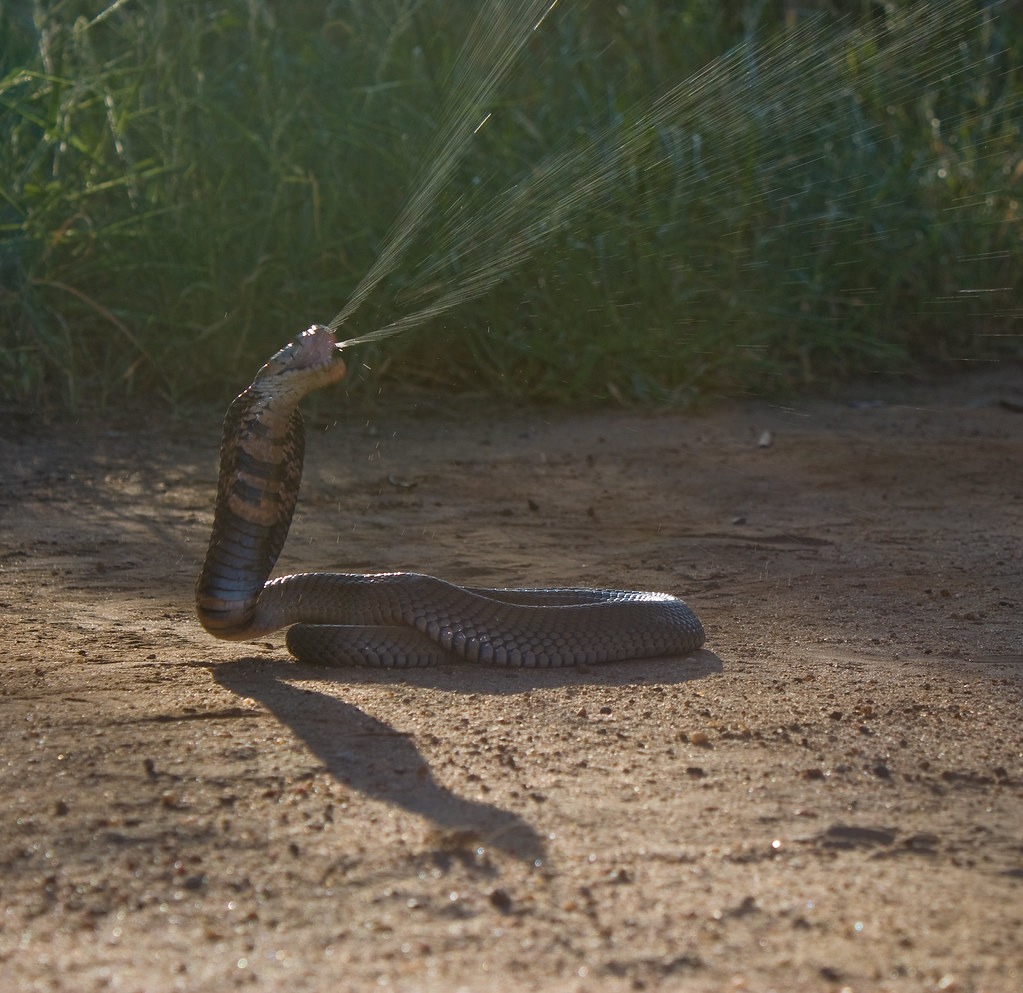
Distribution: South Africa KZN, Limpopo
- Colour: Brown with an orange/salmon belly and black
bands on the neck - Length: 1.2-1.6m
- Venom: Cytotoxic
- Venom Effects: Painful Progressive Swelling
CAPE COBRA (NAJA nivea)
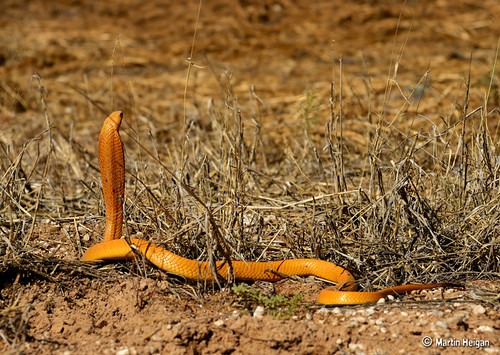
- Distribution: South Africa Western, Northern and parts of the Eastern Cape as well as parts of the Free State
- Colour: Varied between yellow, brown, black, cream and a
speckled phase - Length: 1.4-1.6m
- Venom: Neurotoxic
- Venom Effects: Progressive Weakness and Paralysis
Snouted Cobra (NAJA annulifera)
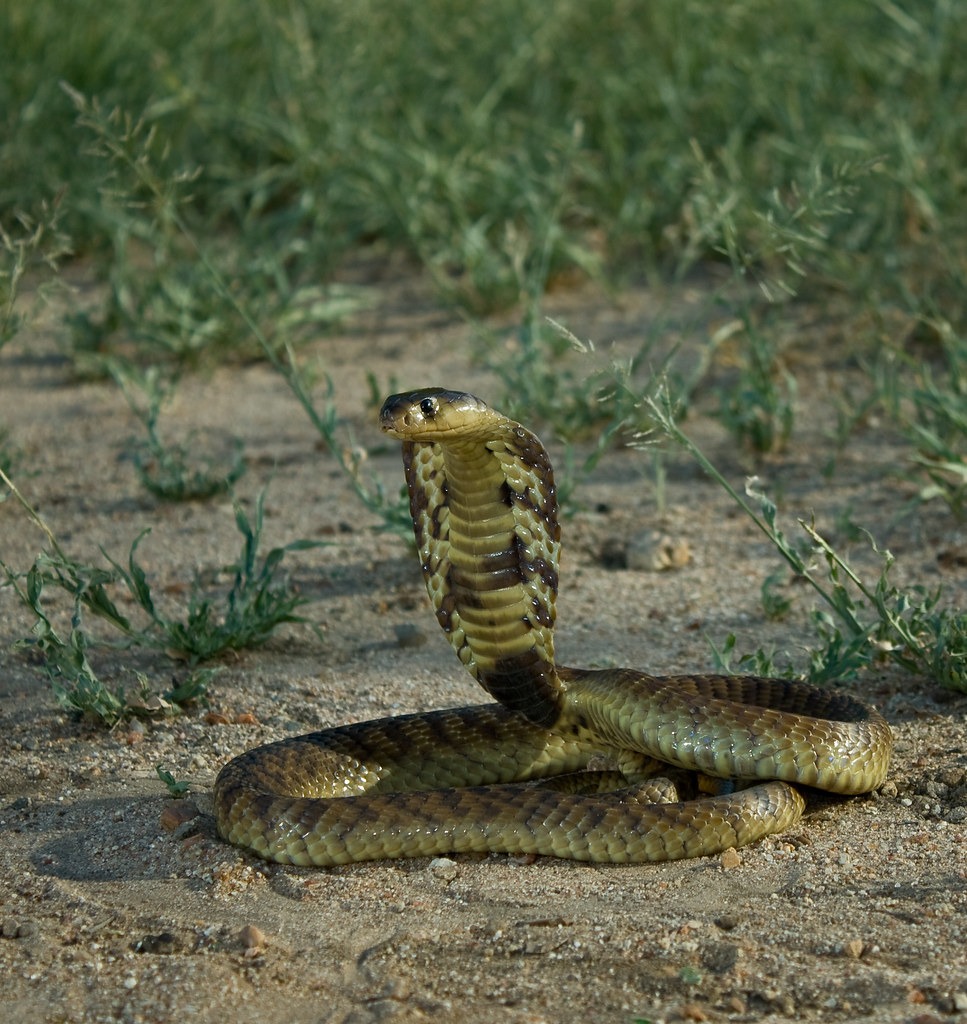
Distribution: South Africa KZN, Limpopo and Mpumalanga
- Colour: Yellowish brown with a yellow belly, or black and
cream bands - Length: 1.8-2.5m
- Venom: Neurotoxic & Cytotoxic
- Venom Effects: Progressive Weakness and Paralysis
along with Painful Progressive Swelling
Forest Cobra (NAJA subfulva)
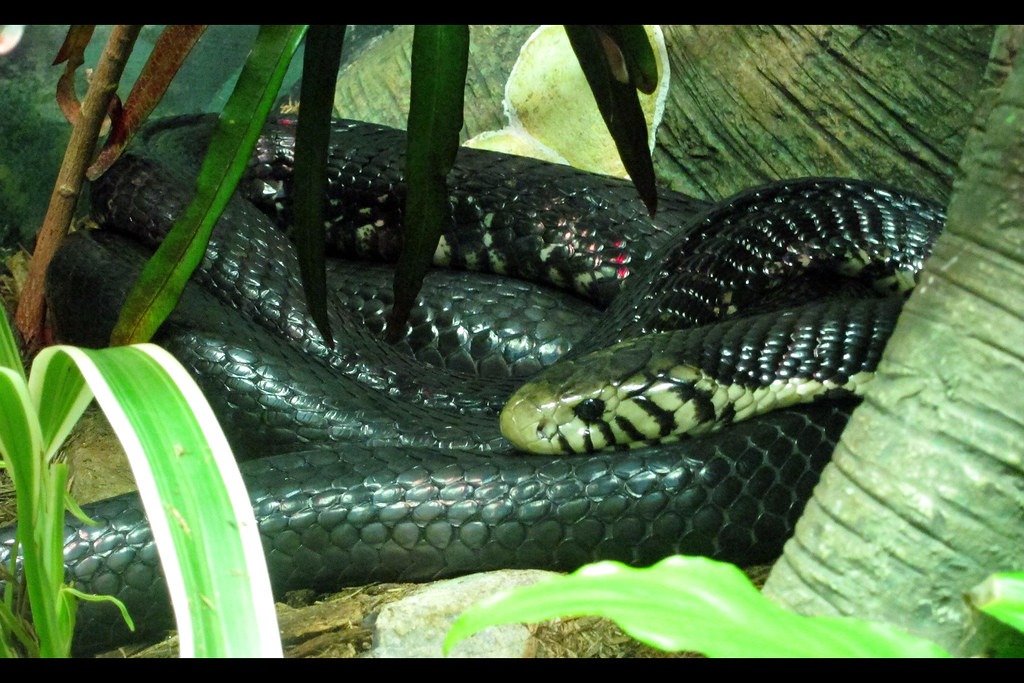
Distribution: South Africa Coastal Northern KZN
- Colour: Black back half with a yellowish-brown front half
- Length: 2-2.7m
- Venom: Neurotoxic & Cytotoxic
- Venom Effects: Progressive Weakness and Paralysis
along with Painful Progressive Swelling
Boomslang (DISPHOLIDUS typus)
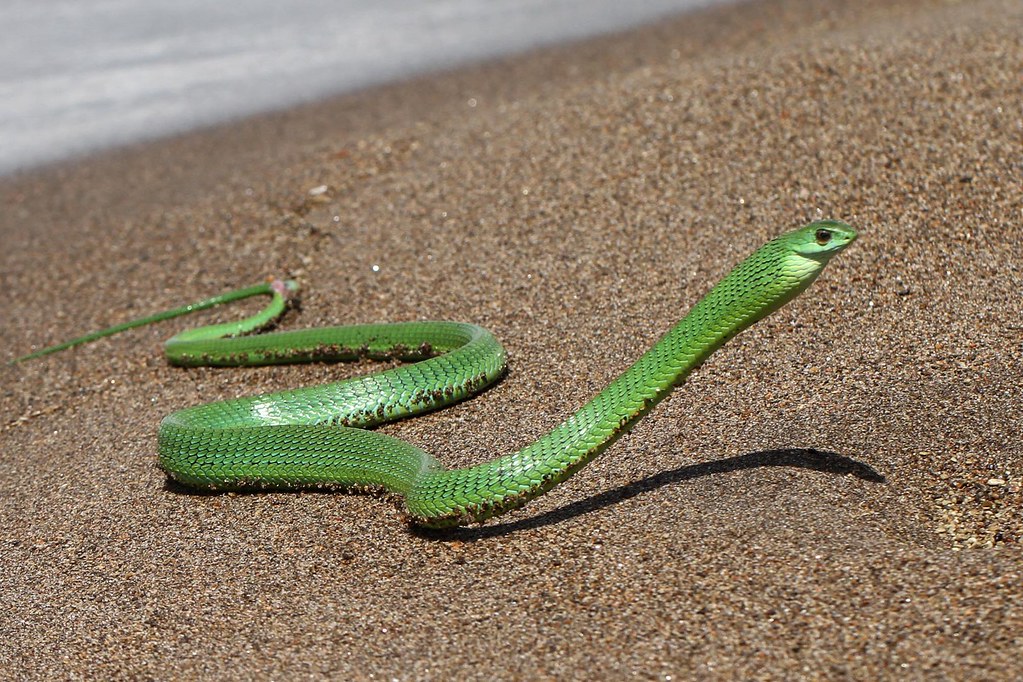
Distribution: Found throughout South Africa apart from
the driest parts and Lesotho
- Colour: Grey, Brown, Green, Red, Blue, Green with Black
“bands”, black backs with yellow bellies - Length: 1.5-2.0m
- Venom: Haemotoxic
- Venom Effects: Bleeding
Vine Snake (THELOTORNIS capensis)
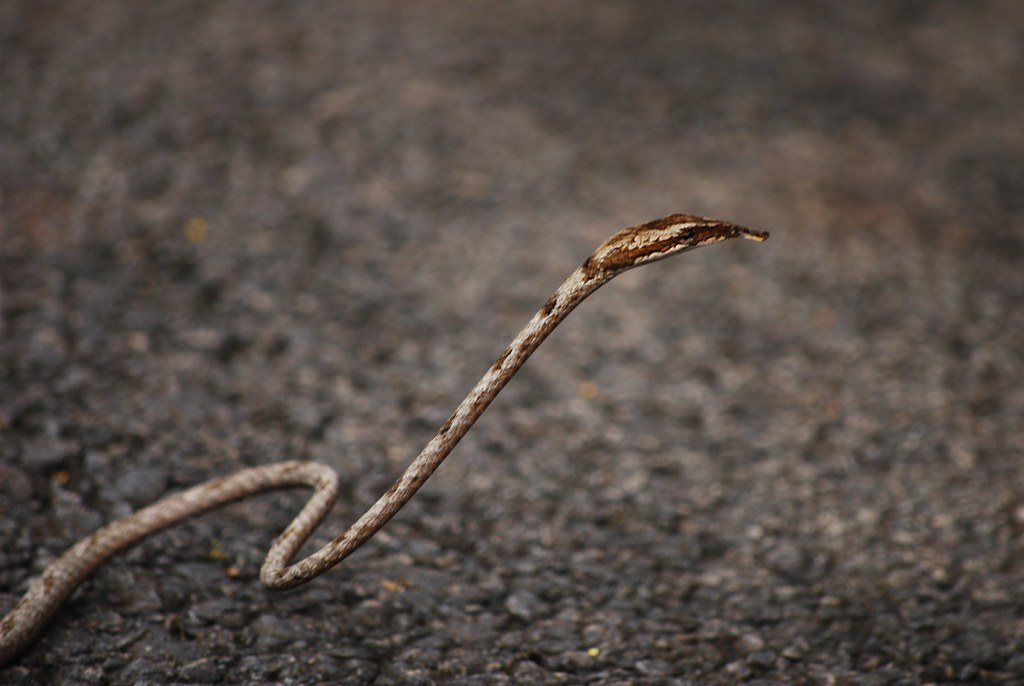
Distribution: South Africa Parts of KZN, Limpopo and
Mpumalanga
- Colour: Cryptically coloured resembling a stick
- Length: 1.2-1.5m
- Venom: Haemotoxic
- Venom Effects: Bleeding
Stiletto Snake (ATRACTASPIS bibronii)
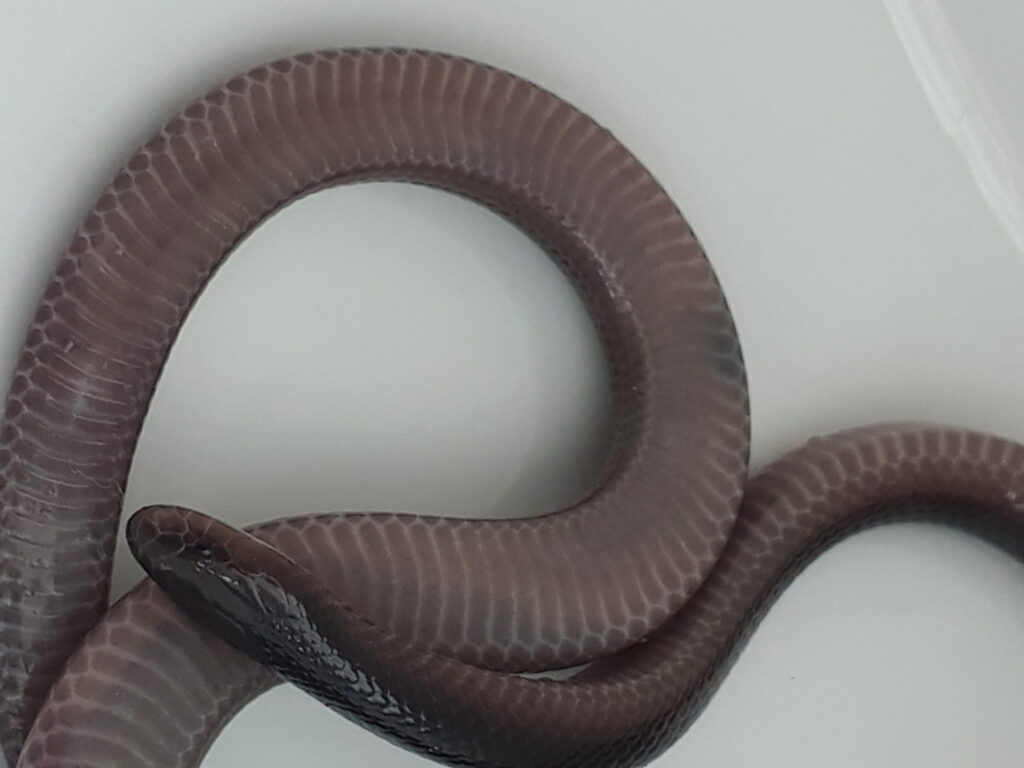
Distribution: South Africa KZN, Gauteng, Free State, North West, Limpopo, Mpumalanga and Northern Cape.
- Colour: Body brown to blackish, Belly may be white
- Length: 40-60cm, max 98cm.
- Venom: Cytotoxic
- Venom effects: Moderate swelling with potential
of causing local tissue necrosis.
Night Adder (CAUSUS rhombeatus)
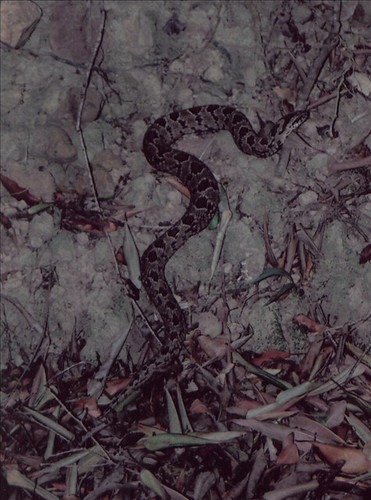
Distribution: SA’s east coast down to Swellendam, including Gauteng, Limpopo, Mpumalanga and small part of Free State.
- Colour: Dark brown Rhombic markings on the
- back. Body colour varies from light grey to brown.
- Characteristic “V”shape marking on the head.
- Length: 40-60cm. Max 1m
- Venom: Cytotoxic
- Venom effects: Moderate local swelling and pain.
Australian Snakes
Eastern Brown Snake (Pseudonaja textilis)
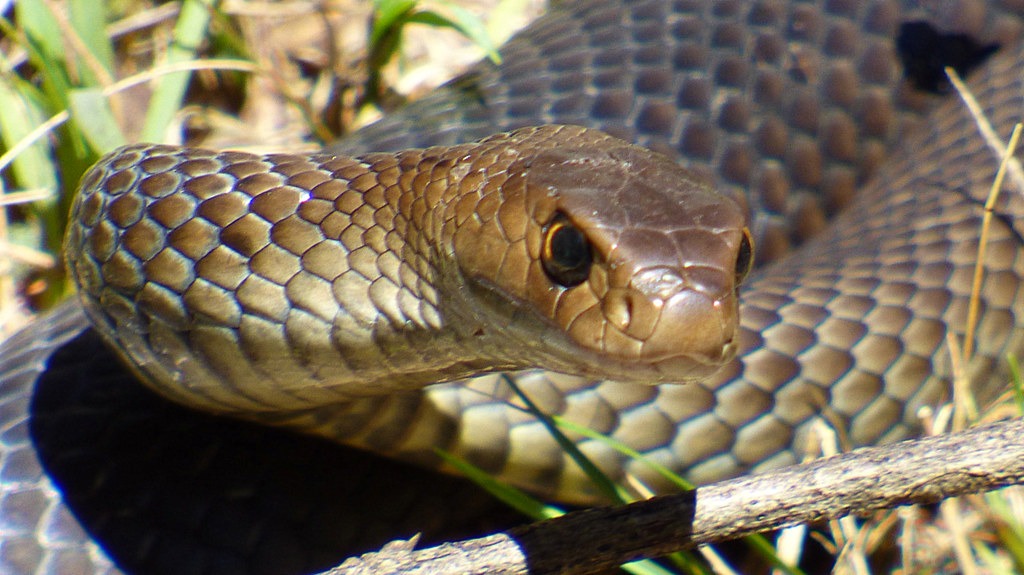
Distribution: Found across eastern and central Australia, including urban areas.
- Color: Ranges from pale brown to dark brown, occasionally with bands.
- Length: Typically 1.5–2.0 meters.
- Venom Type: Neurotoxic and procoagulant.
- Venom Effects: Causes paralysis, rapid blood clotting issues, internal bleeding, and potentially fatal cardiovascular collapse.
Inland Taipan (Oxyuranus microlepidotus)
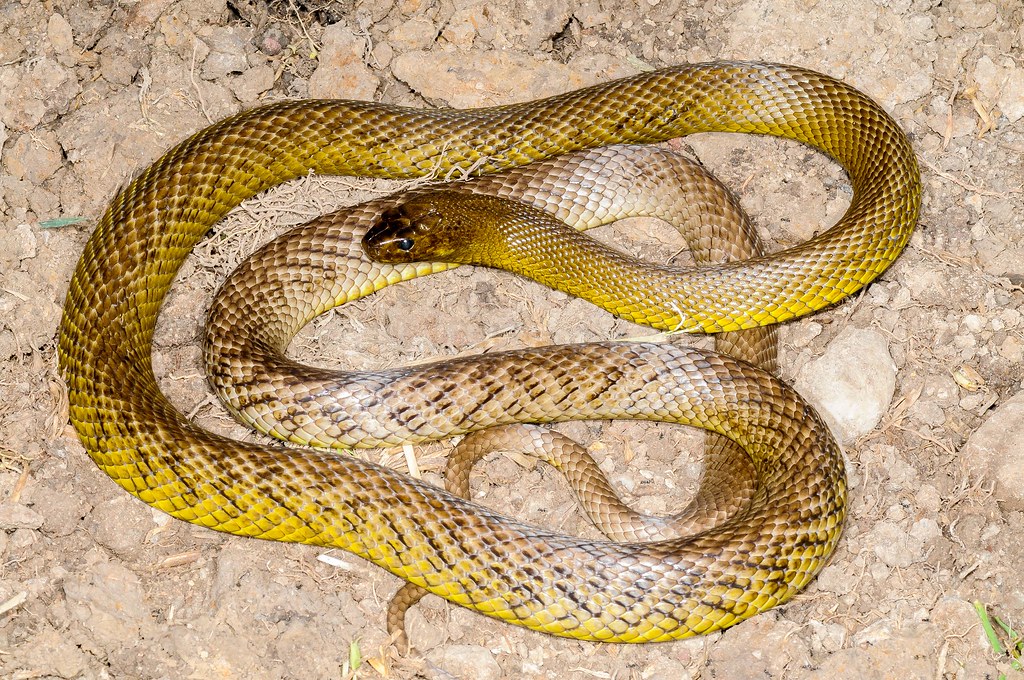
Distribution: Remote arid regions of Queensland, South Australia, and New South Wales.
- Color: Light tan to dark brown, with seasonal color variations.
- Length: 1.8–2.5 meters.
- Venom Type: Neurotoxic, hemotoxic, and myotoxic.
- Venom Effects: Severe neurotoxicity causing paralysis, muscle damage, and internal bleeding; fatal without rapid treatment.
Coastal Taipan (Oxyuranus scutellatus)
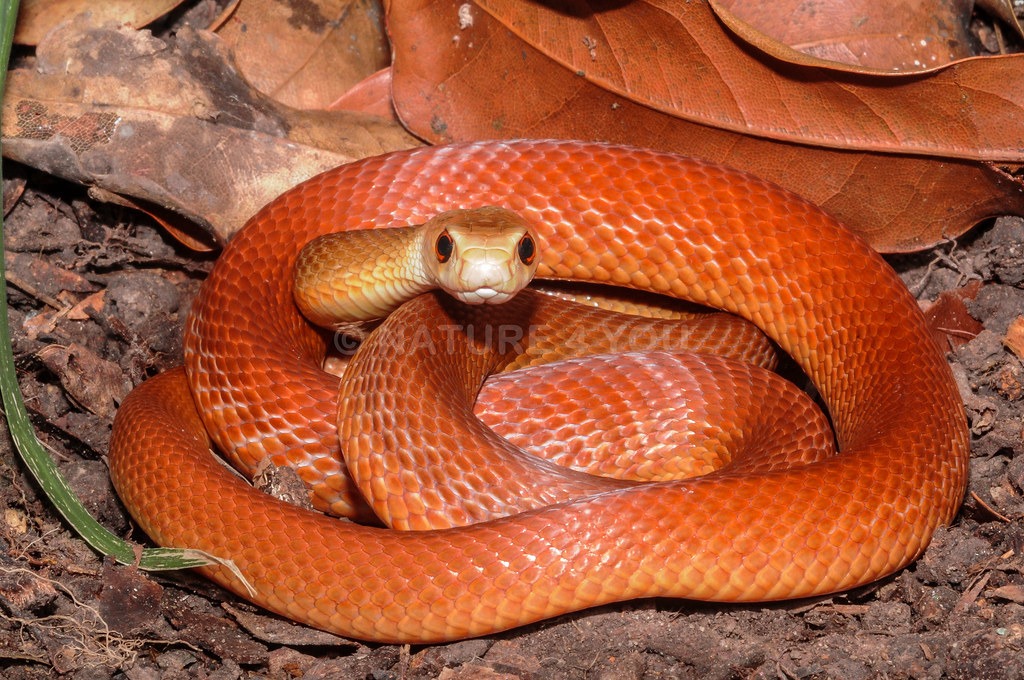
Distribution: Northern and eastern coastal Australia, from Queensland to northern New South Wales.
- Color: Light brown to reddish-brown, with a paler head and underside.
- Length: 1.5–2.5 meters.
- Venom Type: Neurotoxic and hemotoxic.
- Venom Effects: Rapid paralysis, internal bleeding, and potential kidney failure; highly fatal without antivenom.
Tiger Snake (Notechis scutatus)
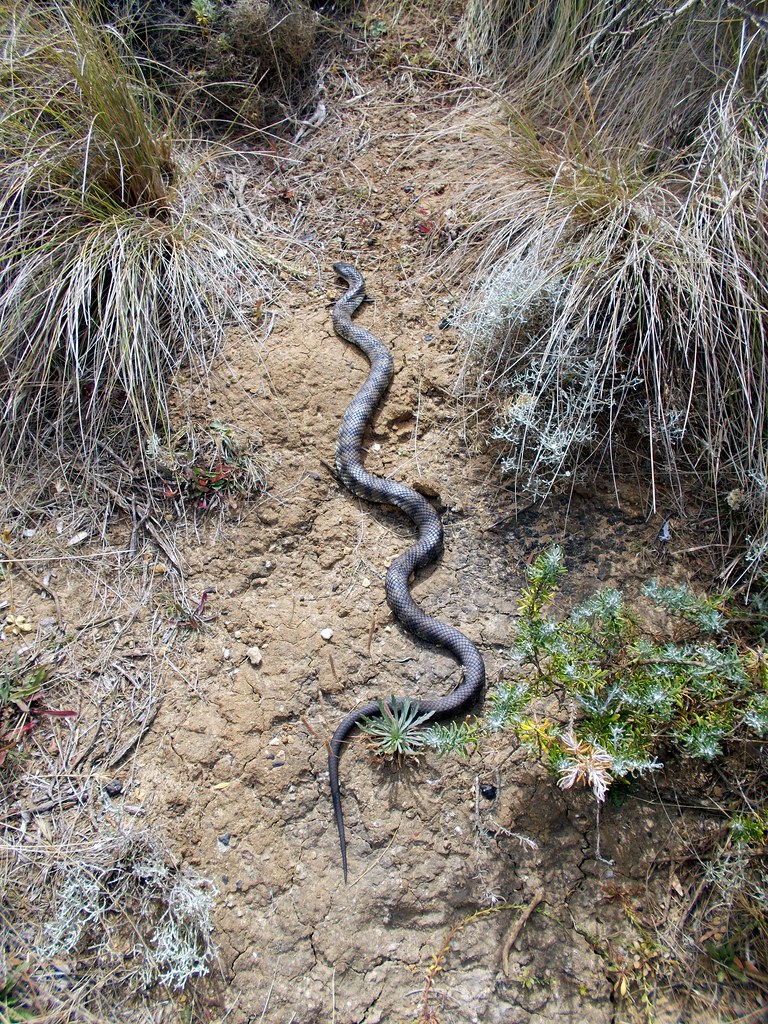
Distribution: Southern Australia, including Tasmania, often near water sources.
- Color: Black, olive, or brown with yellow or cream bands.
- Length: 1.0–1.5 meters.
- Venom Type: Neurotoxic and hemotoxic.
- Venom Effects: Paralysis, blood clotting issues, kidney damage, and severe pain; potentially fatal.
Death Adder (Acanthophis spp.)
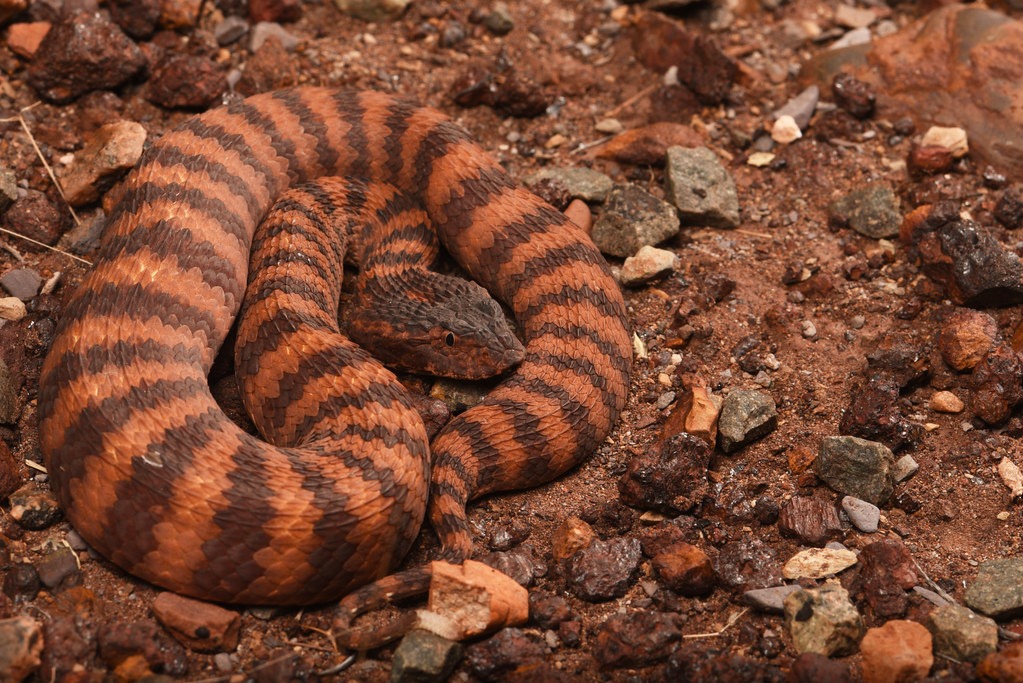
Distribution: Found across much of Australia in forests, grasslands, and deserts.
- Color: Grey, brown, or reddish, with bands along its body.
- Length: 0.5–1.0 meter.
- Venom Type: Neurotoxic.
- Venom Effects: Rapid paralysis leading to respiratory failure; fatal without treatment.
Mulga Snake (King Brown Snake) (Pseudechis australis)
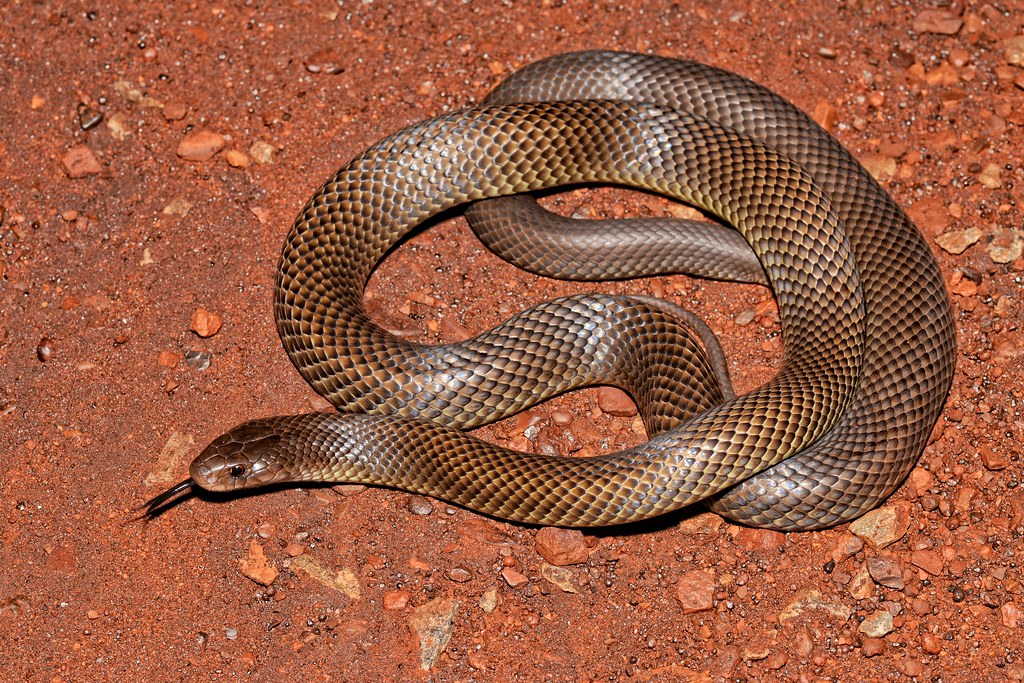
Distribution: Widespread across northern and central Australia.
- Color: Brown to reddish-brown, with a lighter underside.
- Length: 2.0–2.5 meters.
- Venom Type: Myotoxic and hemotoxic.
- Venom Effects: Severe muscle damage, kidney failure, and tissue necrosis
Red-bellied Black Snake (Pseudechis porphyriacus)
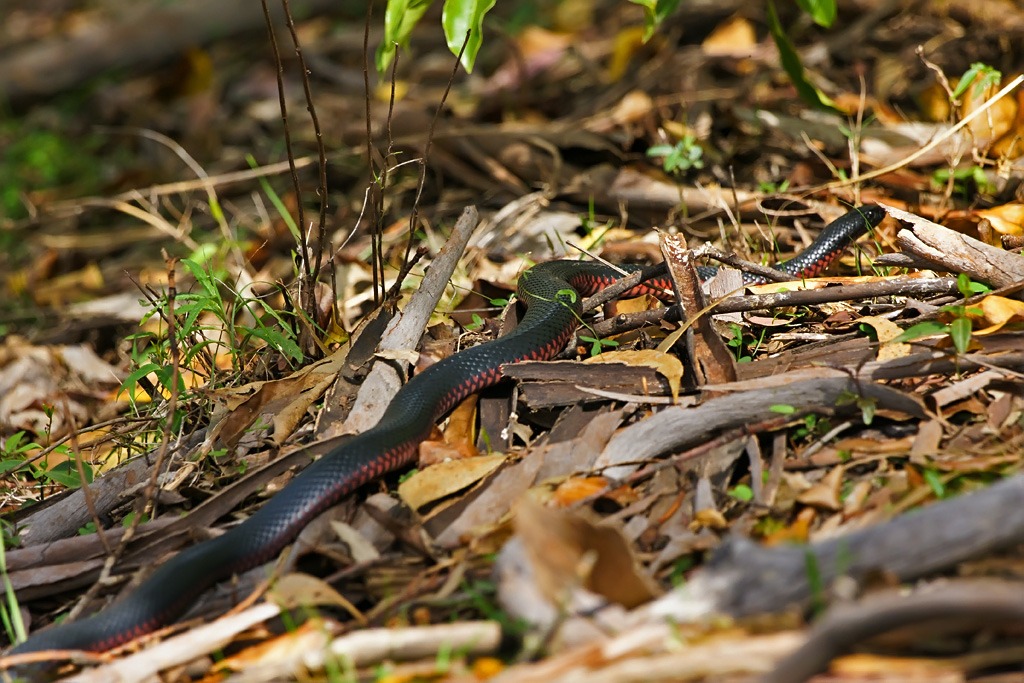
Distribution: Eastern Australia, near swamps, streams, and forests.
- Color: Glossy black with a red or pink underside.
- Length: 1.5–2.0 meters.
- Venom Type: Neurotoxic and myotoxic.
- Venom Effects: Pain, swelling, muscle weakness, and mild paralysis; less fatal compared to others.
Small-eyed Snake (Cryptophis nigrescens)
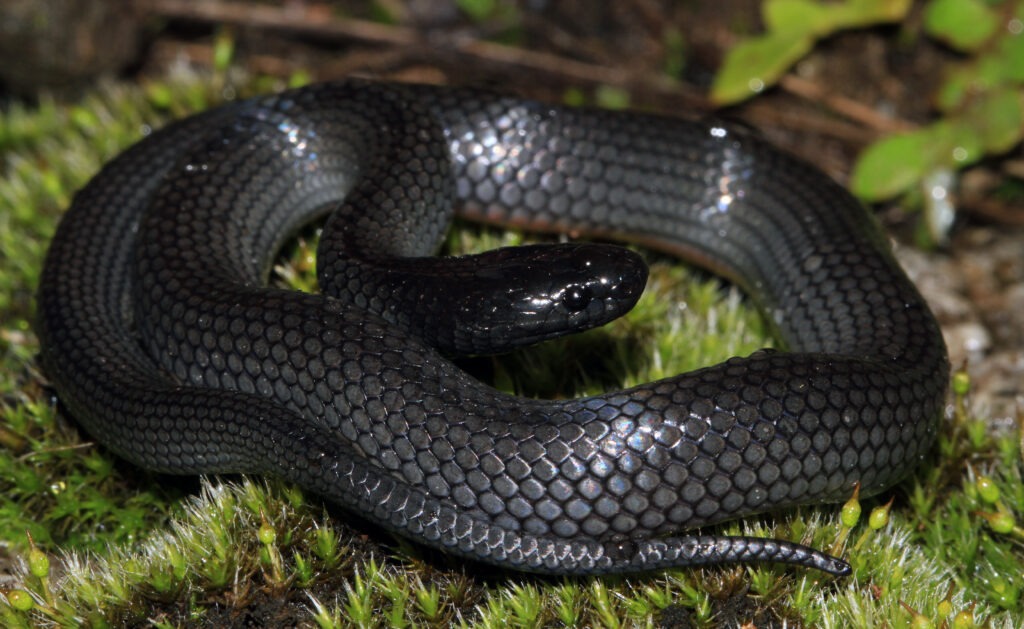
Distribution: Eastern Australia, from Queensland to Victoria.
- Color: Black to dark grey, with a lighter pinkish underside.
- Length: 0.5–1.0 meter.
- Venom Type: Myotoxic and anticoagulant.
- Venom Effects: Severe muscle damage and internal bleeding; potentially fatal.
Western Brown Snake (Pseudonaja mengdeni)
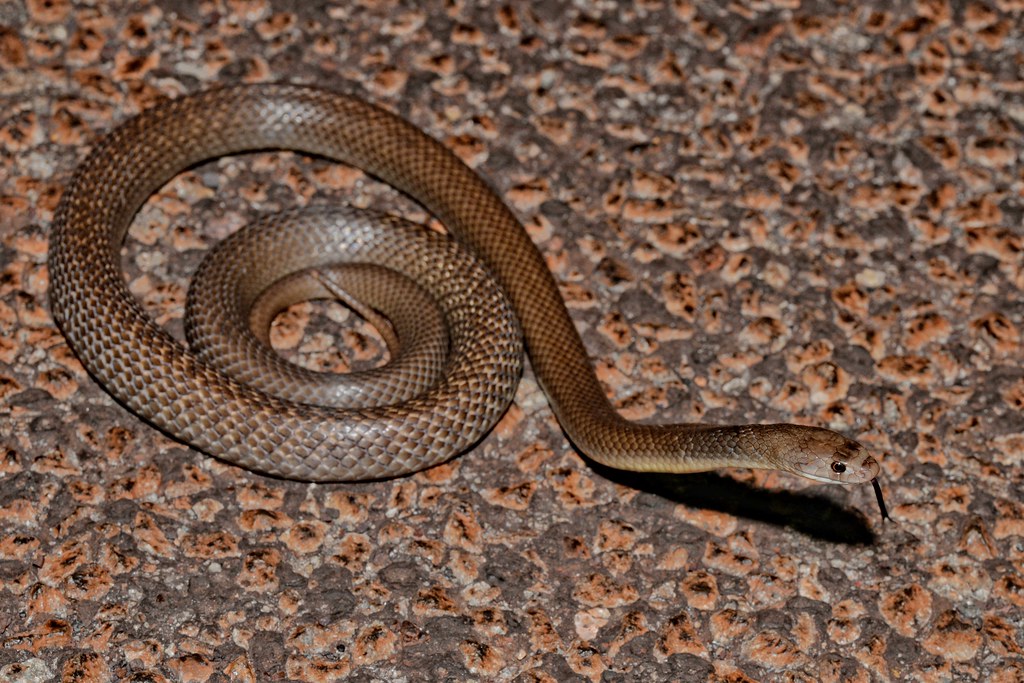
Distribution: Found across arid regions of Western and central Australia.
- Color: Variable shades of brown, sometimes banded.
- Length: 1.5–2.0 meters.
- Venom Type: Neurotoxic and coagulant.
- Venom Effects: Rapid blood clotting disorders and paralysis; potentially fatal.